What is visible in the photo
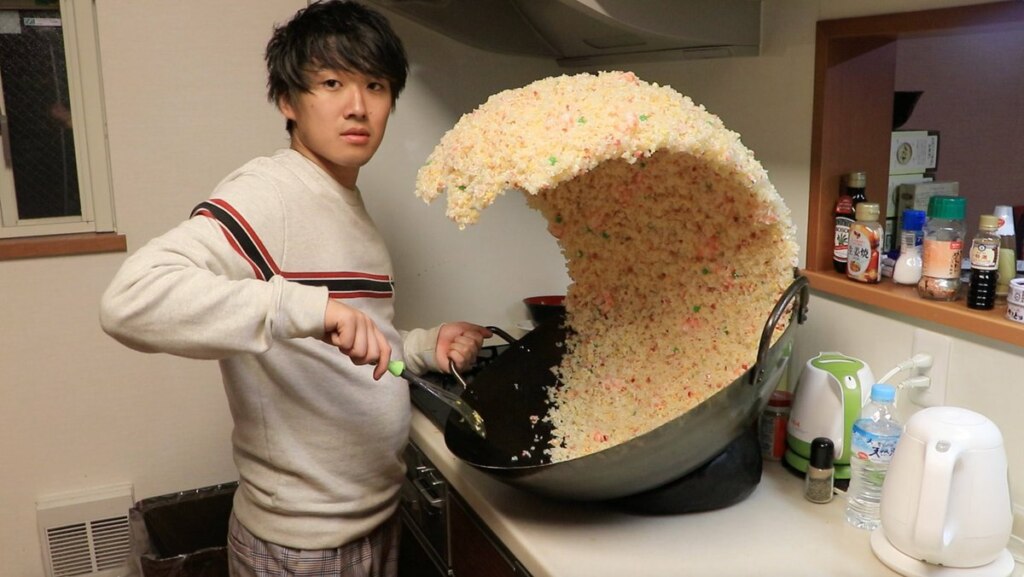
The frame shows a kitchen: a white wall, a shelf with spices and bottles, and a wide black wok on the stove. From it rises a wave of fried rice: light, grainy, with pink and green specks. The crest curls over the edge of the pan and almost falls back in. Two kettles and a bottle of water stand on the countertop.
A young man with dark tousled hair stands by the stove, wearing a light sweatshirt with red-and-black stripes on the sleeve and checkered pants. He holds a spatula in his hand. He looks calmly into the camera, without a smile. This contrast is the basis of the frame: an impossible event presented as everyday cooking.
A prank that turned out to be staged
The photo is linked to a video by Japanese YouTubers in which this frame was part of a prank. The wave was not a real result of cooking: according to press reports of the time, it was a specially built structure made of rice. Figures for the project’s cost and the video’s view count differ, so exact numbers are best not cited.
The idea of the joke is to stun the viewer with its scale and present it as something mundane. The reactions of the prank’s participants became part of the video, but they are only indirectly related to the meme itself: the meme lives on a single frame.
How the photo became a photoshop meme
In January 2019 the photo spread across social media: people began inserting the wave into seascapes, historical paintings, and stills from films and cartoons. A series of photoshop battles quickly formed around the frame, with each new version finding an unexpected place for the rice.
The wave is often compared to Katsushika Hokusai’s woodblock print “The Great Wave off Kanagawa”: the curl and the light foam indeed recall that composition. This resemblance helped the photo turn into jokes about famous landscapes.
The meme’s main secret is the contrast between the calm face and the impossible scene. The photo itself does not document what happened in the kitchen, and later versions were made by other people.
Caption examples for the photoshop edit
Below are captions invented for the template. Each one relies on the hero’s calm expression and the scale of the wave.
“Dinner is served, and it’s already sailing toward you.” The word “sailing” turns the dish into a maritime phenomenon, while the tone stays that of a waiter.
“When someone asked you to add a little salt.” It’s funny because of the scale: a small request leads to an elemental force, and the expression doesn’t change.
“Photo from vacation: the perfect kitchen tsunami.” The tourist-snapshot cliché and the everyday scene create a strong contrast.
All the examples follow one pattern: a calm caption describes a catastrophe as a trifle. The more serious the tone and the more familiar the situation, the stronger the joke.
How to work with the template
Scenes where scale and contrast are needed suit the photoshop edit: a huge event presented calmly. When inserting the frame into a landscape, keep the link to the kitchen: the pan and the stove matter, and without them the wave loses its connection to everyday life.
Don’t use the frame to mock the hero as a real person. The meme is about a prank and a calm reaction, not about anyone’s appearance or personal life.