A personal song and a separate life on TikTok
Belarusian musician Arseny Kislyak performs under the name AP$ENT. He has said the idea for "Can I come with you?" emerged when he already understood that he and his loved ones would have to leave, and he was overcome with a sad mood. The song is written as a story in several acts: meeting, overcoming loneliness, love, and separation. About a year after its release, the track became widely used in short videos; viewers layered the sounding plea over scenes with stray animals, reunions, and moments of support. A later edit doesn't exhaust the composition's original meaning.
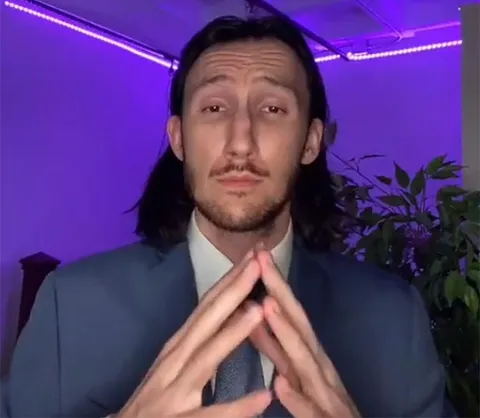
In the photo, a young man looks straight into the camera, his face neutral, his eyes hidden behind pixelated black glasses, with a light, blurred background and no caption. Whether this is actually AP$ENT can't be determined from a single frame without a confirmed original source, so it's better to treat the portrait as a reaction to the song trend rather than as a cover image or an official portrait of the musician.
The plea to stay close changes its addressee
The key phrase comes across as a brief plea for closeness. In the song it's embedded in a longer personal story about love and separation, while in memes it's often addressed to a stray cat, a dog, or a person left on the sidelines. Shrinking the scale from the grand story of departure down to a specific creature makes the plea tender and relatable. In another version, the same sound clip can amplify loneliness and the need to join a group.
It matters that the author linked the song to his own mood but didn't reduce the work to a political slogan alone. Its use as a meme doesn't give anyone the right to attribute a single motive to all listeners or to treat every version as a call to emigrate.
Captions for a plea to tag along
For a clip of a cat at the door: "I came to check what that package was, and now — can I come with you?" The animal looks as if it's begging to come inside, and the song gives the scene a touching tone. For a trip with friends: "I said I'd stay home, but then I saw the photo by the lake. Can I come with you guys?" Here the audio underscores the change of heart and the wish not to miss out on a shared moment.
A third example, for a work chat: "Everyone went out for coffee and I only just noticed the message — can I come with you?" The song adds drama to a simple case of being late. These are original captions, not quotes from the song or statements by AP$ENT.
Don't lose the lyrical tone
The sound suits videos where someone approaches a group, seeks attention, or asks to be allowed to stay close. For a lighter clip, you can pivot to a funny reason — say, the wish to join a group getting pizza delivered. If you use the song as a reaction to a stray animal, don't turn it into a prop: the footage should show care and safe interaction, not a risky approach.
The song touches on emigration, loneliness, and closeness, so a carefree edit doesn't have to explain all of that, but the original meaning shouldn't be declared purely a joke either. The portrait by itself says nothing about the man's identity. Keep the figure in the picture separate from the author of the track until the identity is confirmed.