What the picture shows
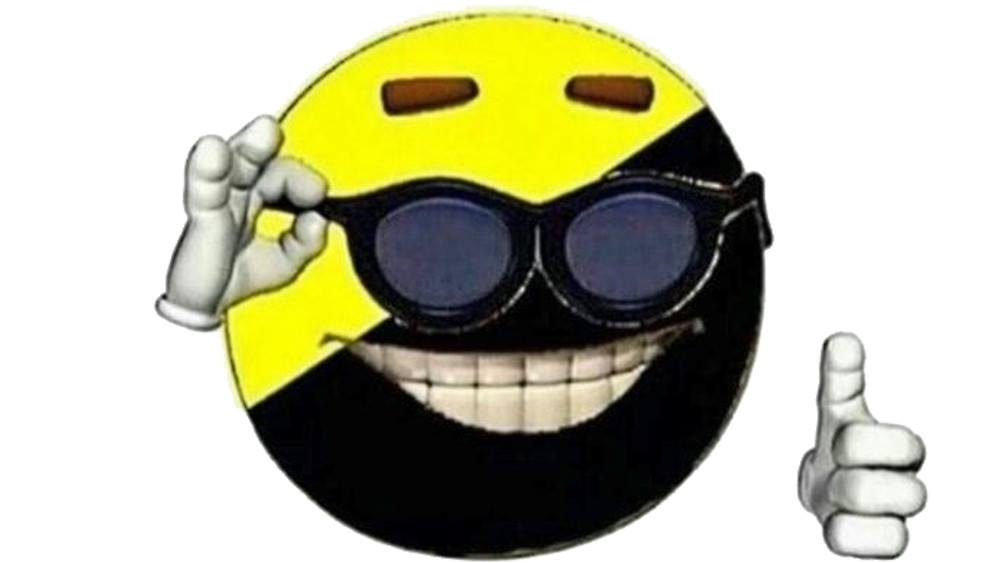
The picture shows a round emoji split diagonally into a yellow upper half and a black lower half. Above are two brown squinting rectangular eyes, and below them large dark sunglasses, whose left arm is held by a hand in a white glove. The lower part of the face is taken up by a wide, white-toothed grin, and at the bottom right another hand gives a thumbs up.
It looks self-assured and a bit cocky: this is how people are drawn when they are sure they are right and have no doubts. Yellow and black are the colors of the anarcho-capitalist flag, so the image reads as “ancap” at once.
Where the emoji came from
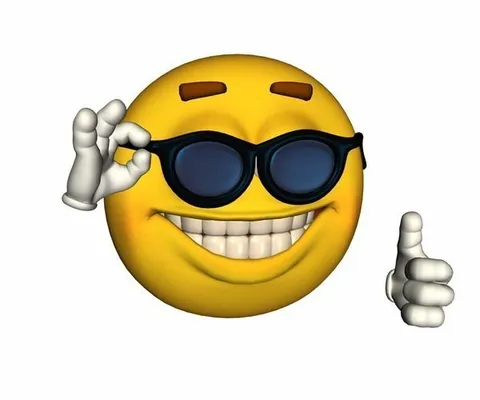
According to descriptions of the meme, this is a political version of the Picardia image, which goes back to a 3D emoji from the EmotiGuy app and has circulated on the Argentine site Taringa since 2014. The yellow-and-black version appeared in August 2016 on Reddit and 4chan, and was used in captions mocking anarcho-capitalism and other ideologies.
The author of the original picture and of the political variants is not named in the sources. For the reader, only one thing matters: this is not a portrait or a TV character, but a conventional “mask” of a supporter of an idea, which users draw and caption.
What the question about courts means
Anarcho-capitalism is a political theory according to which there is no state, and all services, including protection and justice, are provided by private organizations on market principles. The most common question to such a model is: who will judge, who will enforce the sentence, and what stops a rich person from bribing a private court? Supporters usually answer that disputes will be settled by private arbitration agencies, but critics find these answers unconvincing.
That is why the phrase “courts under ancap” became a shorthand for showing that the model has a weak spot which supporters mention only in passing. In the joke, the smiling emoji plays the role of someone who confidently answers “it will all be fine” even though the details are unclear.
Caption examples
“Courts under ancap: Well, we’ll sort something out.” The caption shows a carefree answer to a serious question.
“Question: who will punish the offender? Answer: the market will decide.” The joke relies on a familiar formula.
“When they asked about the courts, and I had only come up with how the road would work yesterday.” Self-irony aimed at a confident pose.
“When your weekend plan is supposed to somehow work out.” A contrast between confidence and the absence of a plan.
The joke is aimed at a reader who knows what the argument is about, so it is best used where the context is clear. Otherwise the caption can be made neutral: any confident answer to a complicated question, where “we’ll sort it out somehow” looks comical.
How to use the picture
The emoji works well for captions where someone with a broad grin dodges a detailed answer. It is important to remember that the meme mocks an idea and a style of arguing, not people. Try not to use it for insults: it works better when the joke is about confidence, not personal qualities. A white or transparent background lets you insert the picture into any collage.
A good caption separates the picture itself from people: the joke is about a carefree formula for answering, not about the interlocutor or their views. That way the meme stays a joke rather than a label.