What's shown
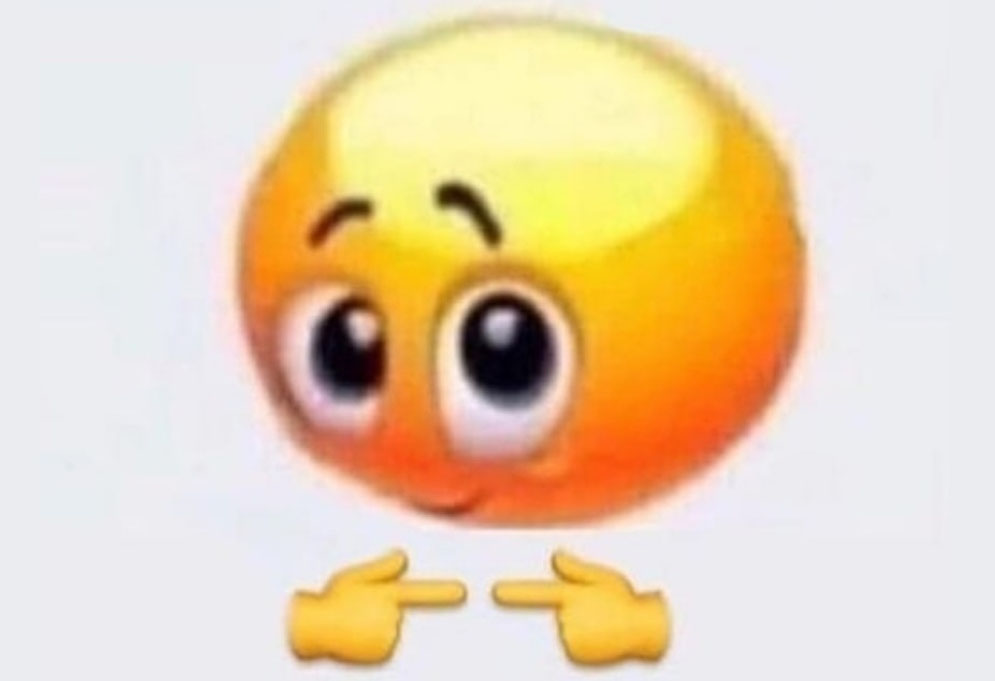
At the center of a white background is a large round face done in a glossy style: an orange-yellow gradient, a highlight at the top, thin dark eyebrows raised into peaks. The eyes are huge, with black pupils and highlights turned up and to the side; the lower part of the face is slightly flushed, and the mouth forms a small, shy smile. Below are two hands with index fingers pointing toward each other, not quite touching.
The combination of peaked eyebrows, blushing, and fingers creates the image of a creature that's embarrassed and just a little hopeful. The whole thing looks cute but slightly exaggerated, cartoon-style.
What's known about its origin
The specific source of this image, the platform, or the designer of the emoji set is unknown. The picture looks like an enlarged and heavily compressed emoji, so it's unclear which messenger or app it came from. It's also unknown whether this particular image became the basis for a trend on any given platform.
What is well documented, though, is the tradition it draws on. The combination of two index-finger-pointing emoji aimed at each other is described as a sign of shyness and embarrassment when asking for something; the earliest mention of this usage is dated to 2011, and it became widespread in February–March 2020, when the fingers started being paired with the "pleading face" emoji. The current picture-based version continues the same line: it takes a familiar gesture and makes it more cartoonish and endearing.
How the joke works
The feeling of being uncomfortable accepting attention is familiar to everyone, and the meme makes it visible. The shy face works like a gentle request: the person isn't demanding anything, just carefully checking whether the gift or compliment is really meant for them.
The "toy-like" aesthetic plays an additional role: a glossy bubble in place of a real face takes the pressure off, so the reaction reads as a joke rather than genuine weakness, which means the picture suits both sincere gratitude and flirtatious self-deprecation. There are no words or cultural markers in the frame, and fingers pointing at each other recall a familiar childhood gesture of shyness, when someone doesn't know what to do with their hands — so the meaning comes through without translation.
Example captions
The title "Is this for me?" hints at the main structure: a line from someone else followed by the emoji's reply. Invented examples.
"Someone brought me coffee even though I didn't ask." Shy delight at a small kindness.
"Coworker: 'You did a great job on the presentation.'" Embarrassment at public praise.
"In the group chat: 'Let me cover dinner.'" Mild awkwardness at generosity.
"Grandma: 'I baked these pastries just for you.'" The warmth of family care.
How to use it
The meme works well in personal messages and comments, when you need to respond to kind words without too much ceremony. Sent without any explanation, the emoji reads as "thank you, I'm pleased but a bit embarrassed."
Used ironically, it can also apply to situations where a person clearly doesn't deserve the attention but pretends to be flustered anyway. That delivery should be used carefully, so it doesn't come across as snide toward the other person. If you want a captioned version, place the line above the emoji and leave the title "Is this for me?" as the response: that way the order of roles is clear right away. For chats with quick replies, the image alone is enough.