A portrait with a phone
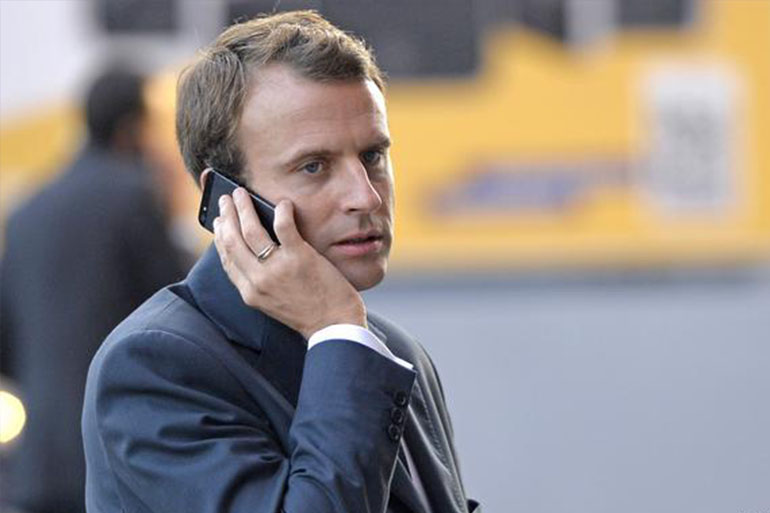
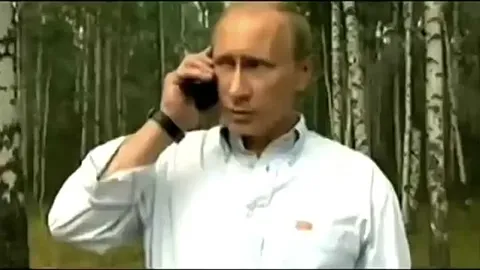
In the image in the catalog, Macron holds a mobile phone to his ear against a blurred background that does not show the exact location. It is a stylized picture, not a photograph that itself confirms any particular call. In early 2022 the French president really did speak by phone with Putin and Zelensky repeatedly, amid rising tension and Russia's full-scale invasion of Ukraine. The "Macron called" formula became a reaction to the frequent reports of new diplomatic conversations.
Phone diplomacy in the news
The Élysée Palace published the dates of some of the calls. In particular, on March 6, 2022, Macron spoke with Putin about the situation in Ukraine and the risks to nuclear safety after the Russian invasion. Reports of calls appeared so often that Macron's name became a recurring figure in the headlines. Public press releases usually gave the topics and main positions, but not a full transcript. The meme picture cannot be used as proof of what was said in a private phone call, or that the other party said any particular quote.
Why the repeated phrase became a joke
Each new call looked like one more attempt to reach a party whose decision was not changing. In memes, the repetition became a running series: Macron dials again, and the viewer already expects the outcome to stay the same. This humor can express the feeling of a fruitless attempt to reach agreement, but it is not a substitute for assessing the real diplomacy. The joke also carries over to everyday reminders: one person keeps calling to ask whether the task is done.
Ideas for new captions
"Macron called to ask who postponed the meeting again." "When you remind someone about the file for the third time and the link still won't open." "Called to check on my order and found out it is 'processing' again." These versions use the repeated call and do not put invented words in the politician's mouth. For current news, the caption should match a confirmed report of a specific conversation and not give the impression of inside information.
This is where the comic rhythm works: the viewer first recognizes the repeating storyline from the news, then the caption promises yet another call, and finally delivers a small everyday letdown. The political leader does not have to be the main target of the mockery; it is enough to transfer the motif of persistent contact to a friend asking whether the presentation was sent, or to a support line where every conversation starts from scratch.
In 2022 this template spread at a time when reports of negotiations alternated with new reports of fighting. So the jokes could express both doubt about the effectiveness of diplomacy and weariness with the endless news cycle. These are two different readings. A short caption does not say what arguments the sides discussed, and a diplomatic conversation cannot be reduced to one photo of a person with a phone. For a historical entry, it matters more to keep this distance than to invent a line for an invisible interlocutor.
A verifiable fact and a meme storyline
The picture shows only the gesture of holding a phone, not who is on the other end. It cannot be used to claim that Macron is talking specifically with Putin or Zelensky: that would require a caption from a primary source. The meme also does not prove that the calls were useless; that is the authors' own judgment. If the phrase is used as a metaphor for a repeated request, there is no need to complicate the context. If a political outcome is being discussed, distinguish between an official statement, journalists' accounts and a user's joke.