What's shown
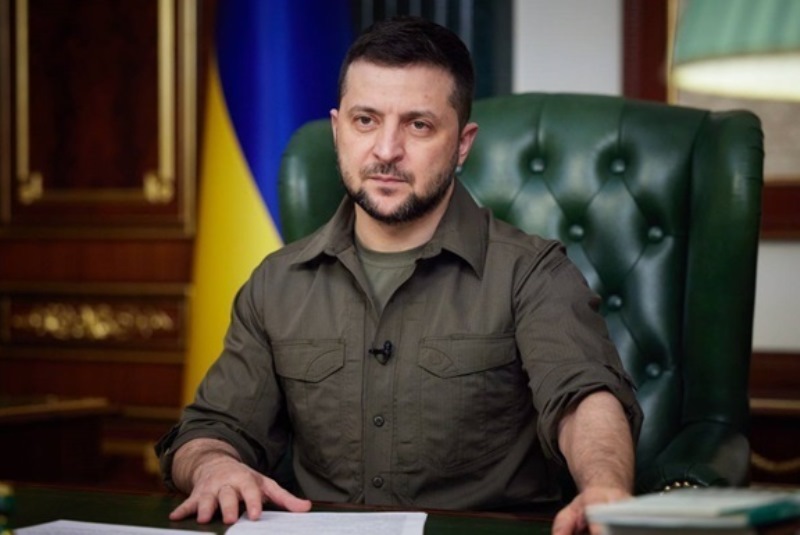
The picture shows Volodymyr Zelensky in a dark shirt, seated in a tall green chair. He's looking straight ahead, hands resting on the desk; flags and official office décor are visible around him. The photo doesn't indicate the date, location, or occasion, so the portrait can't be reliably tied to a specific speech, meeting, or decision without separate confirmation.
The word "crush" entered Russian-language internet speech from English, meaning infatuation or a person someone finds appealing. In the title, a political figure is presented as an object of fan infatuation. The effect comes from the unexpected pairing of an official photograph with casual pop-culture slang. It's an expression of the author's emotion or a joking audience's reaction, not an objective judgment of his looks or his political record.
A political portrait as a fan meme
Public figures constantly appear in the news, so their photographs become instantly recognizable and turn into meme material. The "crush" format shifts the tone: instead of analyzing a decision, it offers an emotional reaction to a confident look, a pose, or a well-shot portrait. Some use it with genuine admiration, others ironically, highlighting the contrast between a serious state role and the language of fan posts.
The meme doesn't prove that the person photographed posed specifically for this kind of audience or even knows about the caption. The photo could have been pulled from an interview, with the phrase added later. During wartime, political portraits are especially easy to turn into propaganda or controversy. It's worth separating the author's personal fondness, the play with the image, and verifiable facts about real events.
Possible captions
A self-deprecating caption might go: "Opened the news for a minute, got stuck on the portrait" or "Promised myself I'd only read the analysis, and picked the photo of the day again." A more neutral version jokes about the effective photography: "The photographer asked for a confident look — mission accomplished." These lines clearly flag their own subjectivity and don't substitute for political facts.
If the goal is to discuss a specific decision or statement, it's better to do that directly and give the context. The word "crush" doesn't explain policy and doesn't establish which event the shot relates to. It works as a reaction to the image, not as a replacement for a news headline. This line matters when the picture spreads outside meme communities, where the irony may not be obvious.
Fact, opinion, and montage
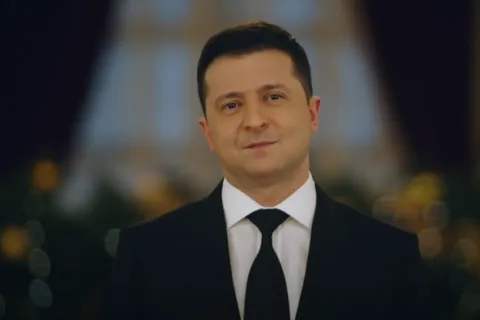
What can be confirmed is that the photo shows Zelensky in an official setting. The title reflects how some users choose to use the image; it isn't a poll, a quote, or proof of universal popularity. The portrait says nothing about the audience's relationship with the politician. The date, the event, and people's reactions all require their own verification and can't be established from a single card.
The template rests on a handful of already-named details — the dark shirt, the tall green chair, the flags in the background, and the caption with the word "crush" — and that's what's worth describing, tying the discussion back to the specific composition of the shot rather than treating the caption as a chronicle of a specific event, a verdict on a political decision, or a general measure of popularity among readers.