Who said the phrase
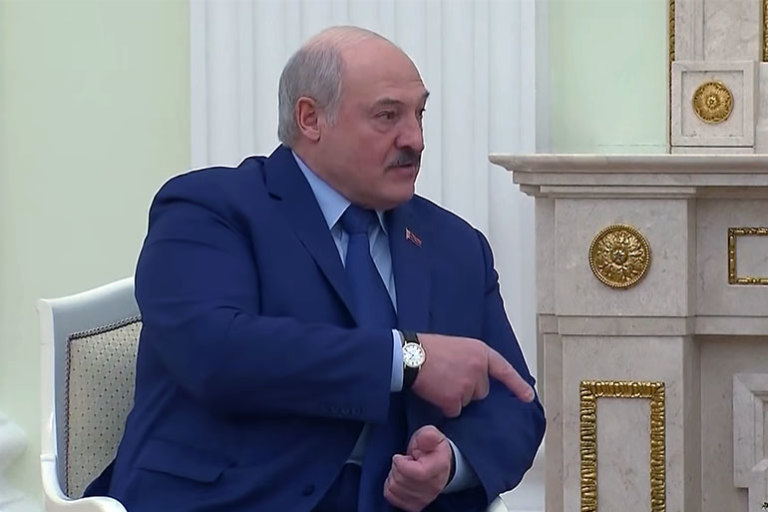
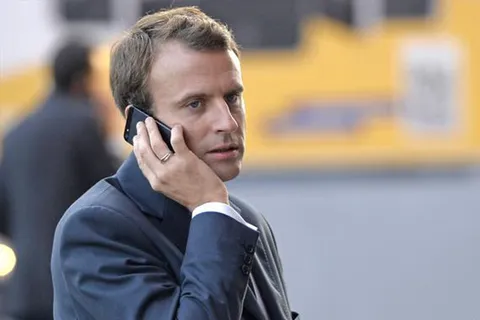
In the image, a man in a business suit sits at a table and points downward; from context, the meme refers to Alexander Lukashenko, who showed Vladimir Putin a map and spoke of a threat of attack on Belarus. The viral formula is often shortened to "I'll show you right now where the attack was being prepared from". The original meeting of the presidents of Russia and Belarus took place on 11 March 2022. It is important not to confuse it with another well-known phrase and not to attribute the line to Putin: the meme relates to Lukashenko's remarks.
The original political scene
In the televised meeting, Lukashenko displayed a map and claimed that Ukraine had been preparing an attack on Belarus and that Russia's actions were preventive. This was a political statement by one of the leaders, made after Russia's full-scale invasion of Ukraine began; the map shown on air is not an independent verification of the accusation. In public materials this claim must be attributed to Lukashenko and not retold as established fact. The words and the gesture became recognizable precisely because of the contrast between the confident delivery and the disputed nature of the "evidence" presented.
Why the meme outlived the news moment
The phrase promises a clear explanation: "now I'll show you". This rhetorical move is familiar from presentations, arguments and everyday excuses. In memes it is attached to slides, diagrams, maps and even an empty table: the expectation of convincing proof turns into comedy. In the political context, what is funny is not the fact of a threat but the confident gesture accompanying a claim whose credibility cannot be judged from the frame. This gap between form and content helps the quote live apart from the original meeting.
Everyday examples
"Now I'll show you why we're late," says a person opening a calendar in which they themselves scheduled the meeting for a different time. "Let me explain why I bought four identical mugs", and they present all the receipts. In a team presentation, the phrase can be placed before a diagram that, instead of clarity, contains five more arrows. These are new examples of the structure, not statements by Lukashenko. Do not edit them so that it looks as if a real politician spoke about a specific everyday event.
Fact, rhetoric and caption
The map shown during the meeting appeared on the broadcast, but its content requires separate verification and should not be called proof of a planned attack without independent confirmation — and the catalog's frame is itself a stylized scene with Lukashenko at a table, not the original map. The meme can poke fun at the “I'll prove everything now” rhetoric, but a historical account still needs the date, participants and context, so readers can tell a well-known quote apart from a political accusation and a confirmed event.
The original broadcast went viral not only because of the phrase itself but also because of the map, the gesture and the audience's reaction. In later parodies the object being shown was often swapped for something entirely unsuitable, such as opening a folder with an empty document. This lets the viewer quickly read the promise of proof and its comic failure. For new captions, avoid imitating the real speech of politicians without marking it: a fake quote can be mistaken for a recording of the meeting.