The original footage
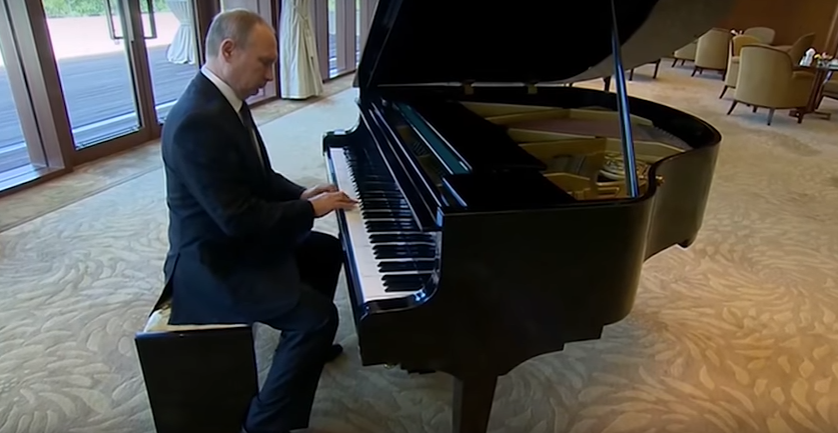
In the frame, a man in a dark suit sits at a black grand piano in a spacious hall with large windows, a soft patterned carpet, and armchairs in the background. He plays while looking at the keyboard, and the scene looks like an ordinary fragment of official video footage. The exact date and circumstances of the filming are not known.
The joke was triggered by the sound of the instrument, which many found out of tune. It was precisely the mismatch between the official setting and the sound that became the starting point for discussion, rather than the figure of the performer himself.
Why the clip became a meme
The comic effect arises from the contrast between the image of a serious statesman and an activity associated with intimacy and a refined ear. Users readily picked up the topic: viewers discussed the melody, the way he sat at the instrument, and the very fact of a public performance, turning an ordinary episode into an occasion for irony.
The joke worked partly because understanding it requires no knowledge of the filming's context. It's enough to see the frame and hear the sound to feel the mismatch, and that quality works well in short clips and captions.
Coubs and parodies
The main format for spreading it was coubs — short looped videos set to music that were popular on the Russian-language internet in the mid-2010s. Creators took the original fragment, trimmed it down to a few seconds, and layered other soundtracks over it, often deliberately off-key or unexpectedly rhythmic.
The parodies quickly branched into different genres: some set the playing to well-known melodies performed by other musicians, while others built a separate rhythmic number out of repetitions. This approach turned a single episode into a set of standalone jokes, each relying on the recognizable shot.
Political context
Vladimir Putin is a public figure, and jokes about his public appearances fall within the broad tradition of internet humor about political leaders. The piano episode isn't about politics as such but about a show of leisure, so it works more as everyday irony about official publicity than as a political statement.
The material is described here neutrally: the meme records the audience's reaction to a publicly circulated video and does not pass judgment on either the performer's skill or the figure's political decisions.
It's worth noting that such clips are often first distributed by official or quasi-official channels before moving on to user-made edits. Because of this, the line between the original material and the parody blurs online, and it is often the parodies that become the more famous part of the story than the original source itself.
Usage
Today the shot is used as an ironic response to any claim of a sudden talent or unexpected hobby. It's enough to insert the picture with the piano to signal that the subject is something pointedly solemn and, at the same time, a little ridiculous.
Thanks to the simplicity of the format, the meme remains recognizable, and parodies keep appearing in discussions whenever the news gives people a reason to recall this scene.
In addition, the scene itself is sometimes used as a visual reference point for discussing the musical taste of public figures: users compare it to other staged videos and argue about how much such material reflects the performer's actual skill.