What's shown in the picture
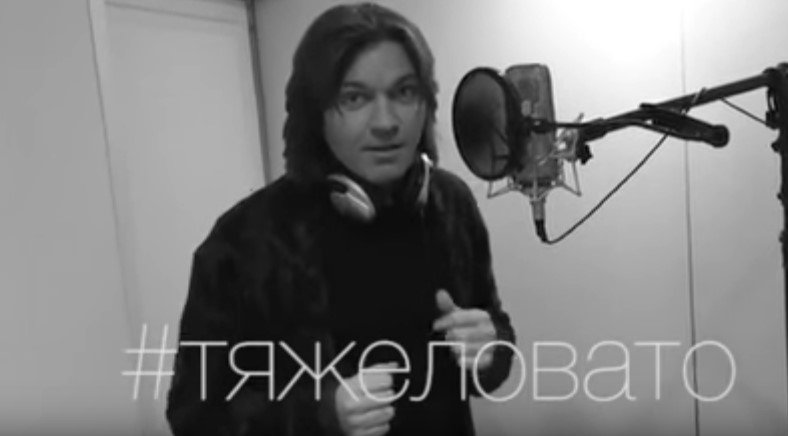
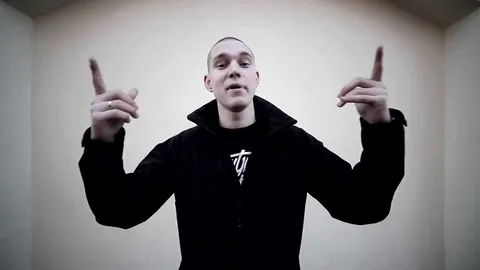
The frame is from a black-and-white video: Dmitry Malikov stands in a recording studio in front of a microphone with a pop filter. He's wearing dark clothes with headphones around his neck, and his hair is long. He looks into the camera and gestures with his right hand, as if commenting on what's happening or explaining a thought. The studio background is light and minimalist, and a microphone stand is visible on the right side of the frame.
At the bottom of the frame, the hashtag "#tyazhelovato" is written in large light letters. It's this caption that turns an ordinary piece of footage into a meme illustration: the viewer understands that the joke is about the phrase, not about the performer himself, and reads the video as part of an internet joke.
The black-and-white image and the performer's calm pose create a deliberately serious tone. The contrast between that tone and the simple word "tyazhelovato" ("kind of tough") is what forms the basis of the comic effect that made the image recognizable.
Origin and history
The meme arose at the end of November 2015, when social media users noticed one of Malikov's tweets, in which he used the phrase "tyazhelovato." The word turned out to be convenient for repetition and ironic use, and it soon began spreading through comments, captions, and replies.
In mid-December 2015, Malikov recorded a New Year-themed video address to the ruble, in which he again used his recognizable manner of speech. The video gained popularity on YouTube and boosted interest in the performer as a hero of internet jokes. According to media reports, the artist himself took the joke in stride and kept working with the theme.
On December 30, 2015, Malikov, together with performer Dino MC 47, released the song "Tyazhelovato," named after the meme. The release of the track was a logical finale to the first wave of popularity: a phrase from a tweet had turned into a full-fledged musical product. Later, in 2017, Malikov appeared in the music video "Emperor of Twitter," where he rapped, which once again confirmed his status as a media personality.
How the meme is used
The phrase "tyazhelovato" is usually used as an ironic reaction to a difficult or tiring situation. It fits for describing a dragged-out job, a hard day, a tough task, or simply an uncomfortable topic. The usage is deliberately calm, almost unemotional, and that's exactly what the joke is built on.
In its meme form, the image of Malikov is often paired with his video clip or a frame with the hashtag. Users insert such images into comments, captions, and replies in messengers, sometimes adding their own explanations. Sometimes the meme is used as a parodic reference in a text where someone needs to express tiredness or restrained displeasure.
Over time the phrase became part of youth internet slang. People would say it with no connection at all to the original tweet, relying on the shared cultural code. This shows how quickly a simple remark can become a fixed unit of language with a community's support.
Why the meme caught on
The main reason for its popularity is the mismatch between the performer's serious image and a simple, almost everyday phrase. Malikov is known as a pop artist with a distinct style, so his calm statements come across as self-irony once placed in the meme's context.
The second reason is how easy it is to repeat. The word is short, the intonation is recognizable, and the caption with the hashtag lets you grasp the context instantly. A meme like this is easy to drop into a conversation, and it works even for people who don't know the whole story behind the artist.
Finally, "Tyazhelovato" showed how a community can reinterpret a public figure, turning him into the hero of ironic folklore. This doesn't take away from the fact that the performer remains an independent figure in pop music, but the story of the meme itself became an example of how internet culture works with the images of media figures.