Portrait argues with the layout
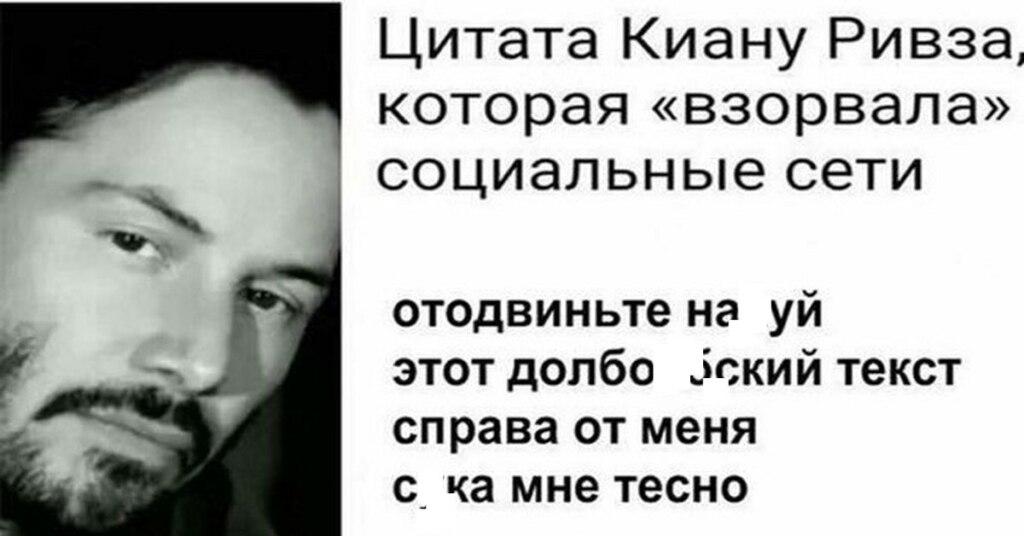
On the left is a black-and-white portrait of Keanu Reeves; on the right is a large headline, “Keanu Reeves Quote That ‘Broke’ Social Media,” and a gruff request to move the text aside. The letters are crammed next to his face, so the portrait seems to get a voice and complain about the neighboring caption. This is not an aphorism about life but a little scene staged inside the picture itself.
The headline promises a bold statement, while the remark concerns a modest task: finding the text some free space. The contrast works without any extra backstory. The serious face and loud presentation create the expectation of a wise saying, but instead the viewer hears dissatisfaction with the design.
How a false speech got tied to the actor
In February 2016 a Facebook fan page published a long speech beginning with the words “I cannot be part of a world…” and attributed it to Reeves. In June 2017 his representative, Cheryl Mayzel, said the actor was not connected to the page; at the same time she said Reeves does not take part in social media.
A Russian-language video with this speech laid the text over a real interview Reeves gave at the Fondation Beyeler museum about a Paul Gauguin exhibition: he was talking about the exhibition, not delivering a viral monologue. Another copy used a computer voice to read the same words. Thus one false attribution grew into different formats. The author and date of the satirical mockup itself are unknown.
The face as a sign of authorship
On a quote card, a familiar face quickly suggests who the text is credited to. A long speech next to a portrait can therefore look more convincing than it is, especially when the card itself does not show an interview, a book, or any other source. In this mockup this device is pushed to obvious absurdity: the words are so mundane and the headline so loud that the reader is faced with a parody of a quote card.
The black-and-white photo keeps a solemn tone, while the blunt request disrupts it. Reeves here does not endorse anyone’s views or deliver advice; the face simply becomes a character in a joke about design. That is why the satirical mockup and the fake publication should be read differently: the first openly comments on its own layout, while the second tries to pass someone else’s text off as a genuine speech.
Invented captions
Hypothetical example: on a poster with a portrait of a musician, a “Big Concert” banner covers the edge of his hat. A caption in the musician’s voice could read: “At least leave me the brim of my hat.” Here the humor comes from the person in the photo seemingly lodging a complaint with the designer.
Another invented variant: a magazine cover where the word “exclusive” is set larger than the interviewee’s name. Caption: “I gave an interview and got a cover headline.” This is no longer a request to shift the letters but a joke about how promotional styling overshadows the subject. In both cases the mockup becomes part of the scene, but the second example shifts the emphasis from crowding to competition for attention.