Bread instead of a face and a new slogan on the cap
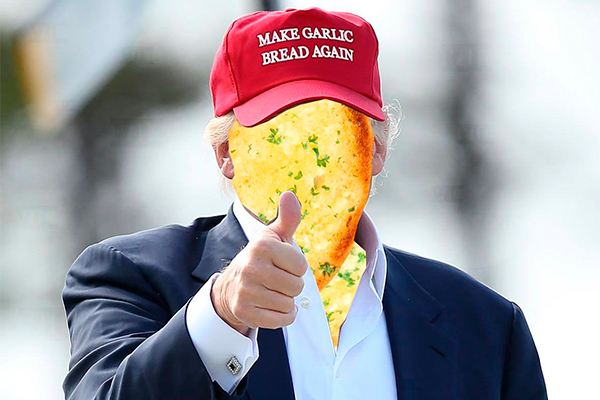
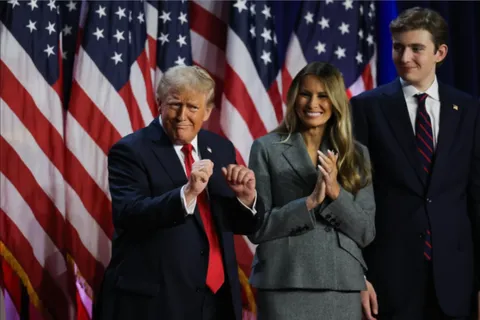
The image shows Donald Trump in a dark jacket and white shirt giving a thumbs-up. His face is covered by a golden piece of bread with greens, and the red cap reads “MAKE GARLIC BREAD AGAIN.” This is an obvious photomontage: the human figure is preserved, but the face has become food. The background is blurred, so three elements immediately draw attention: the bread, the confident gesture, and the altered inscription.
The slogan plays on the well-known formula “Make America Great Again.” The substitution invites readers to perceive devotion to garlic bread as the main agenda of an important public figure. It says nothing about Trump's real preferences and does not turn the photograph into an advertisement he actually endorsed. The author of this specific edit is unknown; its meaning is clear through the combination of political recognizability with an exaggerated cult of simple food.
Several branches instead of one origin
Garlic bread jokes were assembled from different episodes. Among the early online traces is the upload of Elaine Williams's performance on Britain's Got Talent in 2011: the repetition of the dish's name became a noticeable part of an awkward comedy routine. In 2013, another example circulated on Reddit: a screenshot of a conversation in which garlic bread suddenly appeared among angry comments. These traces do not establish a single creator of the whole family.
In 2015, the popularity was boosted by a fake tweet attributed to DMX, claiming garlic bread's superiority over sex. That same year, communities devoted to the dish appeared on Facebook and Reddit. Later the joke reached a technical project of its own: in December 2017, the user DigitalizedOrange proposed Garlicoin, and in January 2018 the currency was launched. The very existence of the project shows how far participants could develop a collective enthusiasm that began with an absurd food rapture.
How an ordinary snack gets enormous status
The basis of most variants is disproportion. Garlic bread remains a familiar food, but it is discussed in the language of the greatest discoveries, dreams, or unconditional devotion. A participant may love the dish quite sincerely; the comedy appears in the scale of the declaration. The more important the object being replaced, the stronger the substitution: the face of a famous person, a solemn award, or a life goal suddenly turns out to be subordinate to a snack.
Such a joke often works as a sign of belonging to a shared game. A person does not explain a recipe or argue for culinary superiority, but supports an already familiar enthusiasm with yet another exaggeration. At the same time, the picture can do without mentioning earlier episodes: the literal bread face is read at once. The history of the community helps explain the repeatability of the motif, but the specific montage keeps its own joke thanks to the visible replacement and the parodic slogan.
Three invented manifestations of bread enthusiasm
In the first invented scene, a person draws up a vacation plan and marks a café with garlic bread as the main item. Museums and walks in the drawing become small detours around one golden goal. In the second invented situation, the owner hands a friend a box with two slices so solemnly, as if passing on a family heirloom. An ordinary snack acquires the status of a rare and priceless thing.
The third invented example involves watching a film at home: the viewer photographs the prepared bread bigger than the television and captions it, saying the main character of the evening has already appeared. In all three cases a real small joy remains, but it is surrounded by a deliberately oversized ritual. The bread has no magical properties here: what is funny is how seriously the participants take pleasant food and how easily they use it to replace familiar symbols of importance.