The photo from Georgia
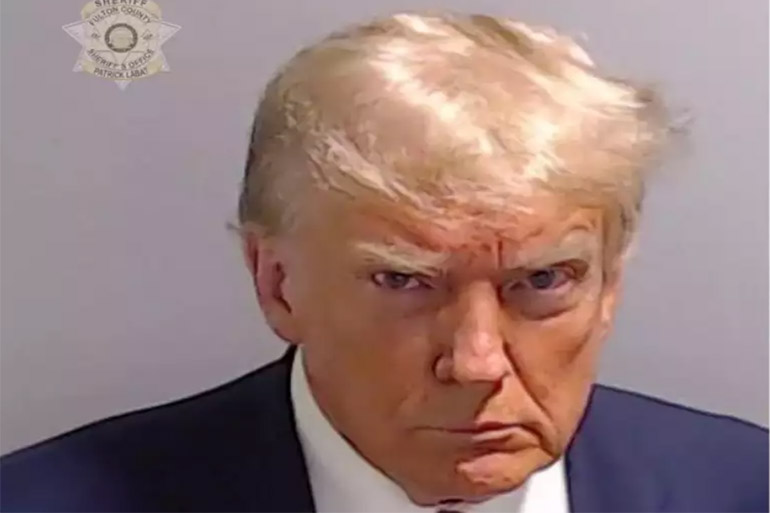
On August 24, 2023, former US president Donald Trump arrived at the Fulton County Jail in Atlanta to be booked in the case over alleged attempts to overturn the results of the election in Georgia. During the procedure he was photographed, and the picture was released by the county sheriff's office. It was the first official mug shot of a former US president. The image quickly spread through the news and political campaigning, and then turned into a meme template.
This is a low-quality version of the same frontal portrait. Shoulders in a dark suit, a light background and the county emblem are visible; the image looks like a processed copy, not a new drawing or a photo from a rally. The fact of booking must not be confused with a final legal conclusion: the photo records the procedure but is not evidence of guilt on the charges. This is an important distinction when discussing a political meme.
Trump and his supporters used the picture as a symbol of persecution, while his opponents used it as a reminder of the charges brought. Within days of its release the photo became part of campaigns and merchandise. The meme version inherits this political weight even when the caption is about an everyday trifle.
A direct stare and a loud statement
In many official portraits, a smile makes the person more approachable; here the expression looks stern and defiant. The direct look into the camera turns a technical, documentary genre into an almost poster-like composition. That makes the photo convenient for captions in which the subject defiantly takes responsibility, denies the obvious or vows not to give up. Even a small confession can be delivered with excessive gravity.
For example: "I sent the email without the attachment and already have an explanation"; "set an alarm for the weekend, I will not back down"; "decided to quit the game after this one last try." But the context must make clear that it is an everyday parody, not new political news. Otherwise the meme can easily be mistaken for a genuine statement or a recirculated campaign image.
How context changes the reading
The same photograph can be at once a document, a political sign and a comedy template. A viewer who followed the case will read the caption as a comment on a public fight; someone seeing the image for the first time will notice only a stern look. So in a serious publication, add the date and explain that this is the Fulton County booking photo, not a frame from a court hearing. For an everyday joke, historical background is not required, but the circumstances of the shot must not be distorted.
Political figures are real people, and a meme about them can touch on current disputes. It is better to aim humor at a specific public pose, slogan or contradiction than at private circumstances. If a caption contains words that Trump did not say in this image, do not present it as a genuine quote. Keeping the difference between a document and an edit preserves both clarity and accuracy.
Making a new version
Pick a caption with a disproportionately serious tone: "I read the instructions once and am responsible for updating the whole office" or "promised to take out the trash and confirm it before the nation." The solemn delivery creates the resemblance to the original; the contrast comes from the trivial content. Don't overload the frame with several claims: the stern face and a short caption already make up a poster look.
For a more historical version, you can set the official image against an everyday goal: "the moment you have to explain why you deleted the group chat." But if the joke touches the actual court case, separate opinion from verifiable events. The craft here is keeping the August 24, 2023 Fulton County booking photo's actual date and venue intact while clearly marking the group-chat line as an invented caption, so readers don't mistake a joke about a deleted chat for a claim about the Georgia case.