From a blood type sign to an emoji
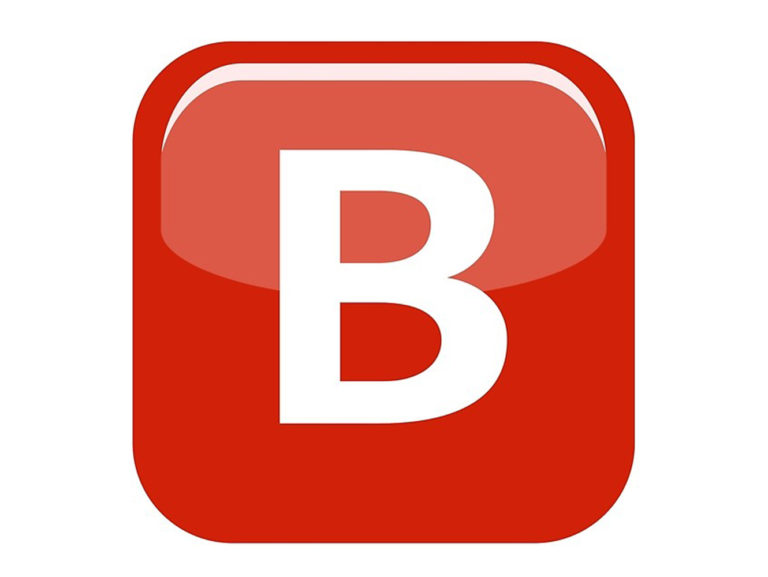
Unicode names the character NEGATIVE SQUARED LATIN CAPITAL LETTER B and gives its meaning as blood type B. In the set's image, it is a white Latin letter on a red square, with no caption or additional characters. To a Russian-speaking eye the shape may recall the Cyrillic “В,” but the original symbol is specifically Latin. In a chat it can look like a button, a road sign, or a bright insert, although its official job is far more prosaic. The internet pun begins at the moment the sign stops merely denoting a blood type and lands inside an ordinary word.
Two different verbal moves
In 2016, the replacement of the letter G with 🅱️ became noticeable in English-language memes: the eye still recognizes the original word, but the bright B makes it foreign and funny. One early widespread example was tied to the phrase “spell icup” and a crude insult; this particular context cannot be reduced to a harmless spelling joke. A separate background is graffiti and the speech codes of the Bloods, where replacing C with B carries its own meaning and is linked to the identity of the gang. This is not the same letter move as G→B in a number of meme words: the sign coincides, but neither the operation nor the history does. Public examples came to differ in tone, from sharp parody to a simple visual pun.
When the square gets pasted into a word
The effect is noticeable because a colored pictographic object suddenly appears in the line of text. Visually it does not look like ordinary letters, but it is close enough to the needed shape that the word can be quickly reconstructed. The reader sees both the correct word and its damaged version at once; this small glitch is the joke itself. In later, softer usage, the emoji can turn familiar words into a sign or a conventional label. But context still matters: where the word alludes to early slang or an insult, the insert carries a sharper meaning than in a casual play with spelling. When read aloud this is not always apparent, but on screen the red square catches the eye immediately; the meme blends a written word with a pictogram. That is why the device is especially expressive in a short caption or headline, where a single colored insert changes the look of the whole line.
Invented word games
🅱️ood is an invented stylization of the English word “good”: the initial G is replaced by a red B, and the word stays recognizable only by its sound. Such a sticker in comments would look like a deliberately spoiled compliment — exactly as the original G→🅱️ device intends, not just a bright insert of a ready-made letter.
Another invented example is the caption “🅱️ame over” on a mock game screen: the G in the word “game” gives way to a red B, and the familiar phrase about the end of a game looks deliberately broken. In the same spirit, the invented address “Do🅱️, sit!” swaps the G in “dog” for the B: a pet's name turns into a graphic joke. One and the same replacement gives different results — a compliment, a final screen, or a nickname. These are new examples of the G→🅱️ letter play itself; they do not quote early offensive captions. Their comedy is visible on screen, where the square is pasted into the line and stands out noticeably from the neighboring letters.