From portrait to montage
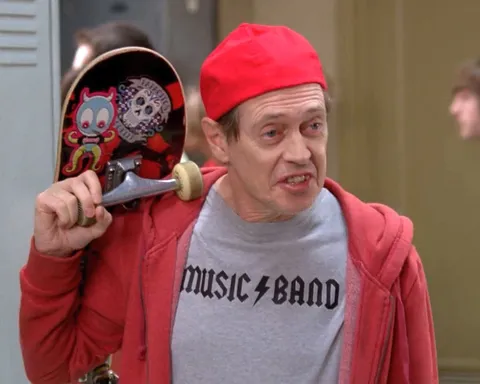
The format became noticeable in April 2011. Its early history is linked to Photoshop Friday on the Something Awful forum: in the Celebrity Match Game assignment, a participant combined Steve Buscemi's eyes with Justin Bieber's face. In the following days a similar image appeared on Reddit, and a separate Tumblr blog collected photo-montages in which the actor's eyes were transplanted onto photos of celebrities. Thus a single editorial trick turned into a repeatable game.
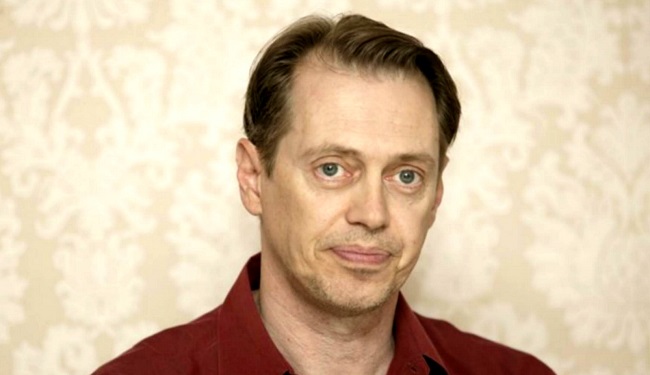
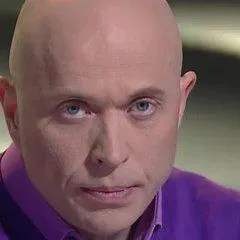
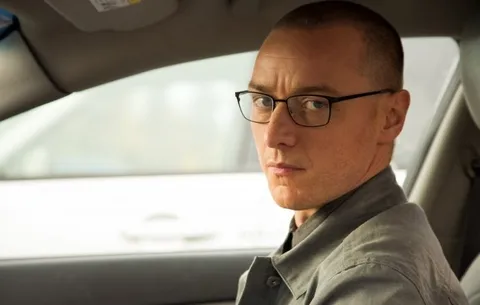
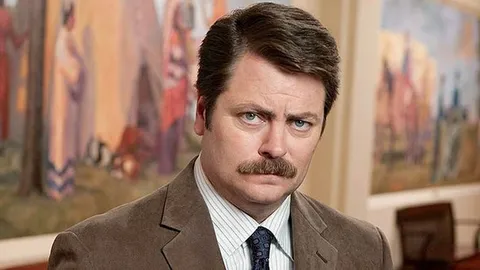
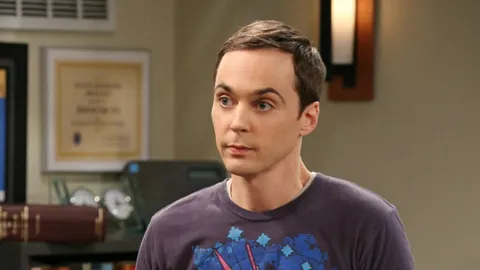
In the photo, Buscemi's wide-set eyes, eyelid creases and intense gaze are especially expressive. But this frame is an ordinary portrait of the actor: there is no foreign face and no visible seams. The montage arises when the eyes are cut out and aligned with another photo, adjusted for size, perspective and lighting. In June 2014, Buscemi discussed this technique on Late Night with Seth Meyers. By then the joke had already gone beyond the early forum collections.
Why the swap works
Eyes often serve as the main landmark in recognizing a face. If you keep one person's hairstyle, clothing and head shape but insert another person's gaze, the brain gets incompatible cues. The result is not simply a “strange face” but a brief recognition glitch: in front of us is a familiar character who suddenly looks like Buscemi. The more precisely the color and angle of the eyes are matched, the more convincing and funny the clash becomes.
The joke rests on recognition rather than on any claim about the actor's character or looks. A good target is a face the viewer identifies instantly: a cartoon hero, a host from a poster, a character from an old photograph. If the original expression is tense or surprised, the eye transplant amplifies it; a calm face, by contrast, gets a wary look. Scale matters: overly large eyes turn a fine photo-spoof into a deliberately crude caricature.
Invented captions
Urgent meeting. Buscemi's eyes are put on a boss's portrait, and the caption reads: “When they said the meeting would be five minutes.” A regular business face now looks as if the person already understands the discussion will drag on until evening.
Family album. The same eyes go onto an old photo of a schoolboy with the caption: “Mom found my seventh-grade diary.” The picture stops being just an awkward childhood snapshot and gets the expression of someone who has just read its contents out loud.
The last piece of cake. The eyes are added to a character staring at an empty plate: “I only looked away for a second.” The montage does not show the culprit but makes the exaggerated suspicion the main event. In every case the plot is clear from the combination of face and one detail of the situation; the caption should not have to explain the eye swap separately.
Where such an image fits
The photo-montage suits reactions to sudden recognition, distrust or awkwardness. It can accompany a story about an acquaintance who unexpectedly showed up in the wrong place, or about a trifle after which a familiar situation looks suspicious. It is better to build the caption around a specific trigger — a found receipt, a strange notification, a familiar voice behind the door — and leave the image the role of emotional accent.
For the swap itself, you need a large portrait where the eyes' position can be neatly aligned with another face. Buscemi's portrait is useful here as a source image but by itself does not show a finished effect. It can be used as a recognizable reference in a comparison or discussion of editing; for a joke about another character's reaction, a separate version with the eyes on his face is needed. This keeps the distinction between the actor's photograph and the derivative images through which the technique spread.