Two clips with one title
On April 23, 2018 Milena Chizhova released the video for “Zaya.” The music and lyrics were by Dmitry Ebergart. The song combined romantic hurt, a desire for attention, and the heroine’s demonstrative independence. The affectionate address in the title contradicted her irritation, and alcohol became part of the story of her feelings. It was a musical image from which a parody could pick out one trait and make it far more noticeable.
On April 29 a version by Danya Kashin, known as DK, appeared. He put on bunny ears and turned the emotional pop video into a deliberately crude domestic performance. In early May frames from the parody spread in VKontakte communities, including “Oatmeal, Sir.” Discussion of the two videos kept the popularity going: viewers compared the original with the remake, and individual images let people express an attitude without resharing the whole song. The meme wave relates to this parody, although the title and the occasion for it came from Chizhova.
Bunny ears among the aftermath of a party
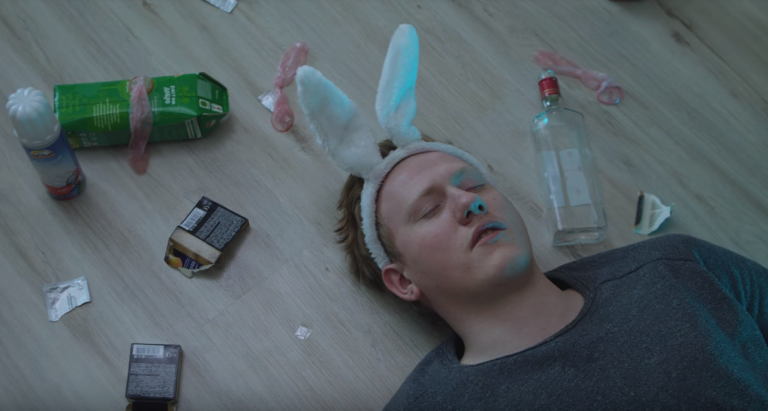
In the image Kashin lies on the floor, turning his face toward the camera. He wears a dark gray T-shirt and a headband with long white ears; blue marks on his face heighten the impression of absurd makeup. Bottles, a green package, and other small objects are scattered around. There is no text caption. The frame is taken from a staged music video, not from a random photo of a blogger’s personal evening.
The almost overhead angle makes the figure part of the mess. The ears keep promising a cute character, but the position on the floor destroys that image. The contrast works even without sound: the accessory seems left over from another, more festive moment, while the rest of the composition shows its comic aftermath. In a still frame the pause is especially expressive. The hero is no longer doing anything, and the viewer mentally reconstructs the actions that could have led to such a stop.
The parody becomes an independent reaction
Within the clip the picture takes part in mocking the musical heroine. In conversation it is assigned a different role: she plays a person after a meeting, work, or a difficult day. For such a transfer a general impression of exhaustion is enough. The bottles keep the link to the original plot, but the caption can replace the festive cause of tiredness with a completely mundane one.
At the same time the bunny ears keep the frame from becoming just a sad portrait. They add a gap between how the hero meant to look and what came out. The meme therefore fits not only tiredness but also a failed attempt to be charming, energetic, or carefree. Self-irony appears when the sender takes on this absurd role personally. Knowing the parody adds a musical memory, though the visual contrast can work on its own.
The festive plan and the unfestive result
In an imagined variant the caption reads: “Me after agreeing to just decorate the hall.” The ears stand for the festive part of the task, and the position on the floor for the aftermath of moving tables, searching for garlands, and endless redoing. What is funny is not the tiredness itself but the gap between a small promise and the scale of the resulting work.
Another invented plot begins with a decision to watch one short episode before bed. A morning frame with bunny ears is captioned “Kept the cozy atmosphere, lost the routine.” The third example concerns a game party: a participant picked a funny costume for the character but spent the whole evening setting up the shared server. The picture shows the final state of an organizer who was preparing to have fun. All three situations use Kashin’s stage absurdity as an expressive summary of their own failed undertaking.