The empty grid and its details
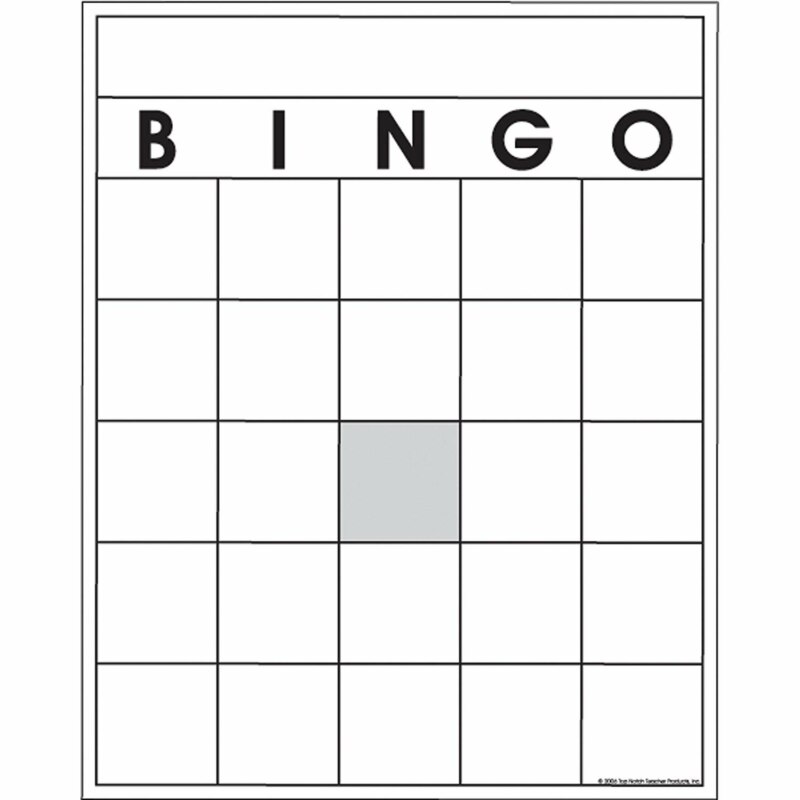
The picture shows a bingo card with no text. At the top is an empty strip for a title, and below it a row of large letters B, I, N, G, O above five columns. There are five rows of five cells, so a line can run across a row, down a column, or along a diagonal.
The central cell is shaded gray. On classic bingo cards this cell is usually treated as free. In the lower right corner there is a small copyright notice; it has nothing to do with the joke and does not affect the meaning.
Where word cards come from
Classic bingo is a game with numbers: the caller announces values, and the player marks them off on the card. Word cards use the same principle, but instead of random draws, the cells contain what is likely to happen in a specific situation.
When such cards became an internet phenomenon is not known for certain. Genre templates like this usually have no single point of origin: the idea was simply repeated in different communities and among different audiences. That is why it is not worth naming specific dates or authors.
How crossing things off becomes a joke
In internet bingo, a phrase from the card works as a code word: when the right wording is said in a conversation, a participant makes a mark. A full line means the situation has become predictable, and it can be acknowledged out loud.
It is funny that everyone recognizes the same repeats. Each cell is a familiar scene, and the joy of a match resembles a small everyday victory. The more precise the phrase, the stronger the response from those who find themselves in the same situation.
The exclamation “Bingo!” adds a game frame: the conversation does not simply end, it is closed by whoever spotted the pattern. Sometimes this is true, and sometimes it is irony about how the process repeats every time.
Four card examples
Below are examples of cards written for this article. A row of five phrases is one variant, and any shared experience can go in the cells.
A card for a video call: “let's go point by point,” “can you hear me,” “can I interrupt,” “quick question,” “I'll send it by email.” It is funny when several of these phrases coincide in a single meeting, each one serving as a separate cell.
A card for a family dinner: “so when are you getting married?,” “have you lost weight?,” “need help with the dishes?,” “let's keep politics out of it,” “one more for the road.” A diagonal fills quickly, because such questions come up every year, and recognition turns irritation into a smile.
A card for a clinic queue: “ticket for tomorrow,” “are you the last one?,” “wait for your number,” “office closed for lunch.” The joke is the recognizability of the situation, not anger at the institution; a row fills in a few minutes.
A card for a livestream: “subscribe,” “are you there?,” “stream starts in a minute,” “who's here for the first time?” Short phrases fit easily into cells, so a row fills almost immediately, and the joke lands fast.
Tips on choosing words
The shorter the phrase, the better it fits into a cell. Long sentences throw the grid off its rhythm, while a short wording reads at a glance.
Choose recurring situations, not individual people. A card with an acquaintance's name written on it quickly stops being a joke and becomes an attack. It is better to take common behavior, such as “arrived five minutes late” or “brought a cake to tea.”
Before printing a card, check whether the participants will recognize it. Bingo works only when the cells match the audience's experience. If the phrases are too rare, no line will form and the game loses its meaning; if they are too common, it ends instantly.
A blank template is also handy because it suits any topic: just write a heading in the top strip and twenty-four phrases around the free central cell.