The face in the hold
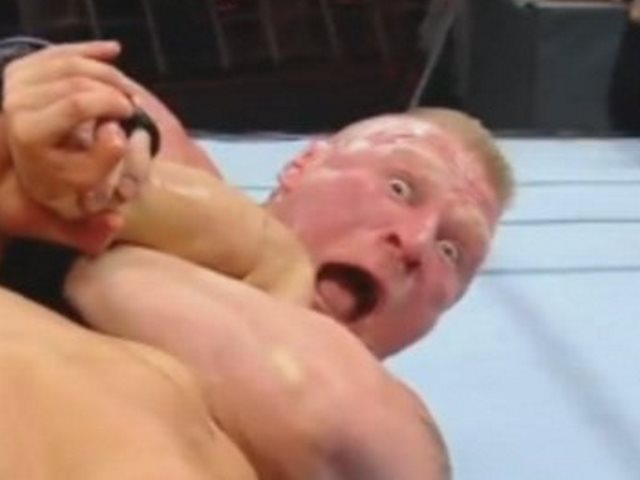
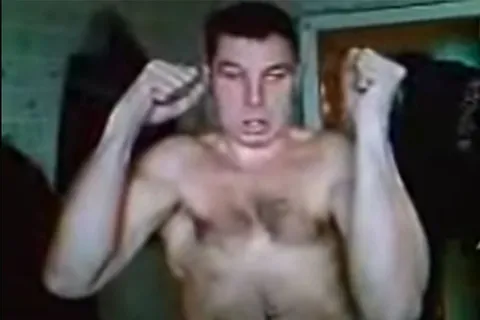
The frame shows a man's face up close: the skin is reddened as if from exertion, the hair is short and light, the eyes are wide open, and the mouth is open. On the left, an opponent's forearm enters the frame, crossing the hero's shoulder. The background is light and blurred: the corner of the ring is visible.
The image is taken from a video recording and is soft-focus, with muted colors. The face makes the frame recognizable: the expression suggests not pain but surprise or fright. The viewer sees a familiar mask of strength slip for a second, and the captions are built around that moment.
The match that started it all
Reportedly, the frame comes from the Royal Rumble match on January 27, 2019, where Brock Lesnar faced Finn Bálor for the WWE Universal Championship. The match outcome and the details of the hold are described differently in different publications, so a detailed recap is not given here.
Jokes about this frame reportedly appeared the next day, January 28, 2019. The exact link between this particular still and a specific second of the match has not been fully confirmed in open sources, so the description should treat it as an assumption. As a meme, the frame is known by the fighter's name.
Why the expression is funny
In wrestling, the face matters almost as much as the moves. A large athlete in a hold has to look composed, so any sudden expression reads as a glitch in the image. Wide eyes and an open mouth read as surprise, and the viewer fills in the storyline themselves.
The joke rests on the gap between the image and the moment. The audience sees the wrestler as immovable strength, and if he looks bewildered, it becomes a short scene with an unexpected ending. The stronger the contrast between the serious context and the expression, the easier it is for the caption to land.
Caption examples
Example 1: “I thought they'd just hug me when we met, but I got grabbed in a hold like in the ring.” The caption transfers the move itself, an unexpected grip, to an ordinary meeting, and the face conveys that moment of confusion precisely.
Example 2: “Stopped by to say hi, and I got pinned against the wall just like at Royal Rumble.” The caption directly references a power move and a controlling hold, so the expression works as intended.
Example 3: “Trying to squirm out of a crush of people on a subway car, with the same face Lesnar has in the hold.” Crowding and the struggle to get out replace the ring, but the principle of the hold stays the same.
In all the examples the caption keeps its link to the move itself (the hold, the grip, the struggle for control over the body) rather than drifting into an arbitrary everyday detail.
How to use the frame
The frame suits reactions to unexpected news, to an overly serious conversation about a trifle, or to the moment when a plan suddenly falls apart. It is best to keep a sporty tone in the caption: the joke stays about the moment, not about the person.
Do not turn this frame into mockery of the health, appearance, or misfortune of real people. Captions work best when they describe the situation, not the hero's weakness.
Captions about realizing a mistake also work well: when someone sent a message to the wrong recipient or realized they forgot something important. The expression in the frame is about belated understanding, so these situations fit it most precisely.