A few seconds of extra time
The camera showed Inna Kalenskaya, her husband Dmitry Gnatyuk, and their nephew Yuri Gnatyuk in the 101st minute of the round-of-16 match. The game was held in Moscow, the tension continued past regular time, and the spectators in festive headdresses were eagerly eating. The episode was brief but clear enough to be recognized without the sports presenter’s commentary.
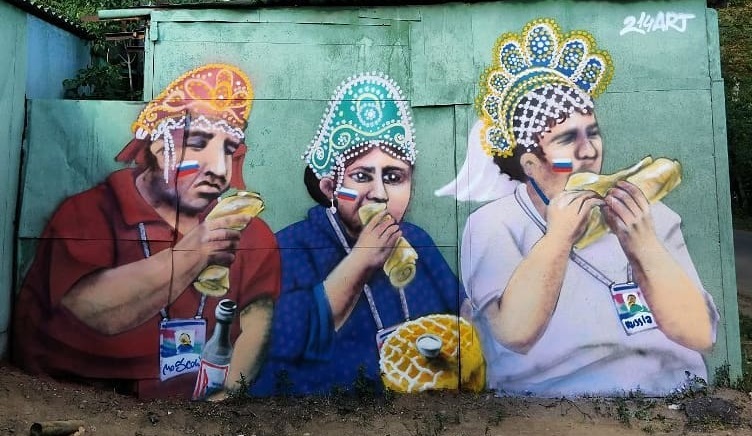
After Russia won the penalty shootout, the image spread across social media. The trio was cut out of the stadium surroundings and moved into other scenes. As early as July 2, a graffiti piece with the same subjects appeared in Moscow. It was created by the artist Alexey Melentyev, known as 214art. The street version changed the food and turned a television moment into a large urban picture that new viewers could photograph.
What the artist changed on the wall
Before us are painted panels on a green wall. On the left, a man in red; in the middle, a woman in blue; on the right, a man in white. All of them wear large ornate kokoshniks and stripes of the Russian tricolor on their cheeks. They hold large wrapped shawarma near their mouths. At the top right is the signature 214ART; along the bottom, the ground and the edge of the wall are visible. So this is a photograph of a drawing, not a direct frame from the broadcast.
The arrangement of clothing creates a familiar tricolor sequence in reverse when read from left to right. However, the main recognition comes from the faces, the headwear, and the shared eating gesture. Replacing hot dogs with shawarma is the graffiti author’s own joke. It keeps the calm focus on the snack, but moves it from the stadium menu to a familiar urban image.
A calm snack amid the events
The comic effect of the original episode comes from two different rhythms. The match demands intense emotion, while the three spectators are busy with a concrete, comfortable action. In the meme interpretation they become people who keep their appetite under any circumstances. This is a conventional role for the chosen frame: eating at one moment does not mean the fans were indifferent to the outcome of the match.
For a photo remake it matters to keep the trio together. Three similar actions form a small collective, as if they had agreed on their own agenda against the backdrop of someone else’s drama. They can be mentally placed in a cinema, a queue, or a family argument. The kokoshniks add festiveness, and the food makes it everyday. On the wall this combination is especially expressive: a large, almost ceremonial portrait is devoted not to a solemn pose but to an ordinary snack.
Three invented events around lunch
The invented caption “Everyone argues about where to go, and we’ve already chosen what to eat” sets planning against the trio’s simple decision. Another storyline places them in a residents’ chat discussing building repairs: as the messages grow longer, the characters keep eating lunch. The calm here belongs to the meme scene invented on top of the familiar image.
The third variant: “Let’s wait until the credits end: the shawarma isn’t finished yet.” An important wait after a film gets a completely material reason. These examples preserve the shared action and do not require changing the characters’ faces. The history of the drawing shows another way to remake it: it is enough to replace the food so that a familiar television episode gets a new setting and a separate comic emphasis.