What the meme is
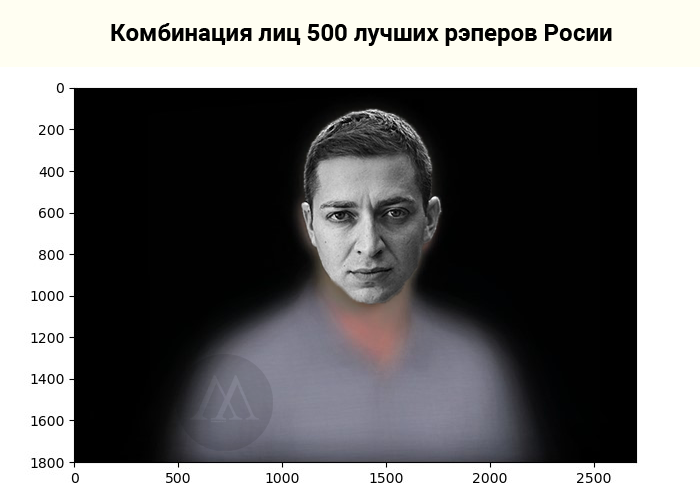
"500 Faces in One" is a parody photoshop that mocks the genre of composite portraits. The original idea behind such a portrait is that many faces are superimposed on each other to produce an averaged image that supposedly represents an entire group of people. In the parody, only the form of this idea remains: the picture shows a single face, with a caption claiming it is worthy of representing the whole category.
The catalog dates the meme to 2017 and tags it "Photoshops." The format is common in the Russian-speaking internet, and the caption on the illustration — "A composite of the faces of Russia's 500 best rappers" — shows that the joke can apply to a specific professional field.
Prototype: composite portraits
Composite portraits appeared long before the internet. One of the first people to systematically create them was the English scientist Francis Galton in the late 19th century: he superimposed photographs of several people with shared traits to produce a "typical" image. The method was used to look for common features within groups, and its scientific validity has long been disputed, since averaging doesn't reflect the real diversity of people.
Later, similar images began to appear in commercial and artistic contexts: photographers and designers created "faces of a profession" or "faces of a generation" from many photos. It is this visual tradition that the parody targets. Whether the meme was based on a specific work is not known.
How the joke works
The humor is built on the gap between promise and result. The format suggests that a multi-faced averaged portrait is about to be shown, but the viewer sees an ordinary picture of one person. The device works even in a single image with no additional text.
The caption matters too: it turns an abstract category into a subjective judgment. The phrase "worthy of representing" means the author is making a personal choice and passing it off as an objective result. That's why the joke reads as irony aimed at attempts to authoritatively decide who is the best in their field.
Spread
Photoshops of this type spread in themed communities, in comments, and on social media. The format is convenient: it can quickly be adapted to any profession, city, or field. Because of this, the template outlives any specific occasion and keeps appearing in new variations.
It's important for the reader to understand that memes like this are often tied to local discussions and rankings. The caption on the image matters more than the picture itself: without it, a single face doesn't read as a parody, and the picture just looks like an ordinary photograph.
Origin and illustration
The origin of this particular meme — the author of the first version, the date, and the platform — has not been established. The meme dates to 2017.
The illustration shows a single man's face against a dark background, with a caption matching the catalog's description: the format of a parody composite portrait. The image shows the stated genre, but the man in the picture is not named in the text of the article and is not its subject. The article describes only the format and the mechanics of the joke.