The real story of the animal
In November 2022, as Russian forces withdrew from Kherson, reports appeared that animals were being taken out of the local zoo. Among them was a raccoon whose video circulated online. A representative of the animal welfare organization UAnimals said that the Russian command had taken the raccoon and other animals to Crimea; the Crimean zoo entrepreneur Oleg Zubkov described the move as temporary housing. UAnimals and Zubkov disagree on what the move meant — a rescue or a simple relocation — and neither account is treated here as the settled version.
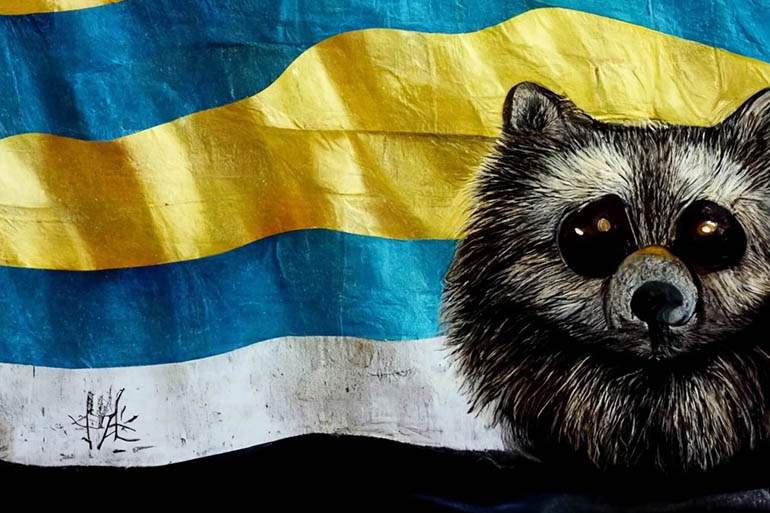
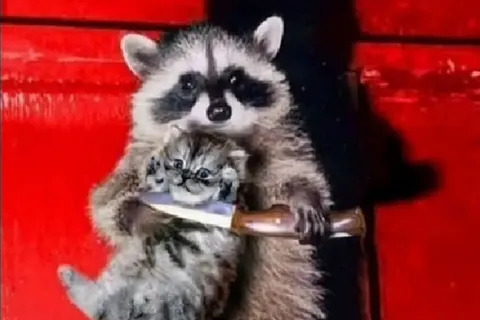
Online the animal quickly got the informal name “the raccoon from Kherson” and appeared in news reports, satirical drawings, photo edits and videos. This is a real animal, not a fictional mascot. Later publications showed it in videos, but that does not mean the raccoon itself became a symbol or took any side: such wording was human interpretation and part of the media presentation.
How the meme appeared
The unusual combination of a wartime event and a small animal produced a sharp contrast. Users joked about a “rescue operation,” proposed swaps and made up adventures for the raccoon. Some pictures mocked the absurdity of the news agenda, others expressed outrage at how the animals were treated. So the format has no single universal mood: a satirical joke can sit next to sincere concern for the animals' fate.
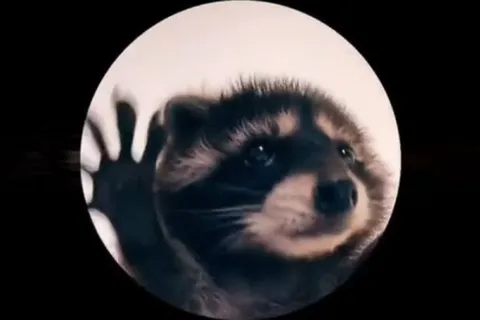
In the local version the pictures most often show a raccoon in a domestic setting or a collage, and the caption casts it as the hero of an adventure. At the same time, many images online may show other raccoons or be photo edits. Not every picture should be taken for a photo of the animal from the Kherson zoo. Appearance alone can't tell one raccoon from another, and nothing beyond the November 2022 reports confirms what happened to it afterward.
The limits of wartime humor
The story arose during the war and is tied to reports of animals being taken out of the city. Short jokes helped people express emotions, but they may sound inappropriate to those who lived through the occupation or lost their homes. Avoid portraying the raccoon as a comic culprit or shifting responsibility onto the animal itself. Keep the distinction between the testimony of organizations, statements by representatives and established documents.
Nor should the meme be turned into news evidence. A photograph does not confirm the circumstances of the removal and does not establish who exactly transported a particular animal. If a post concerns the event, it helps to explain that the dispute is about how to assess the move and who the animal belongs to. A joke can be kind toward the raccoon while still acknowledging the seriousness of the context.
Considerate caption ideas
If you want to keep the comic image of an adventure, move it into a safe made-up situation: “The raccoon went out for a snack and accidentally ended up in the family chat.” For a post about a pet, “When you went to check the bag and became the hero of the evening” works. These examples do not use the real animal as a target and do not mock people affected by the war.
You can draw a raccoon picking a cozy spot for itself with the caption “I'm looking for a quiet corner while the grown-ups argue.” This stays a metaphor and claims nothing about the real animal. In an educational post it is better to place a short timeline next to a separately labeled meme illustration, so readers do not mistake the artistic image for a news photo.
For a humor account it is safer not to repeat propaganda titles, military ranks and invented statements claiming the animal shows loyalty. Focus the caption on raccoons' characteristic curiosity without presenting it as an established fact about a specific raccoon. If the context feels too heavy for a joke, you can use a neutral picture of a raccoon with no reference to Kherson.