An old song, a new spin
The original song “Pedro” by the Italian singer Raffaella Carrà came out in 1980. In 2024, the German producers Jaxomy and Agatino Romero released a dance remix, and clips of a raccoon on a rotating platform spread under it. One of the early, widely shared versions is credited to the TikTok creator fleksa30; the music video and reposts helped the trend leave a single feed. The exact path of all the copies is hard to trace, so the upload date of a particular clip should be kept distinct from the dates of the song and the remix.
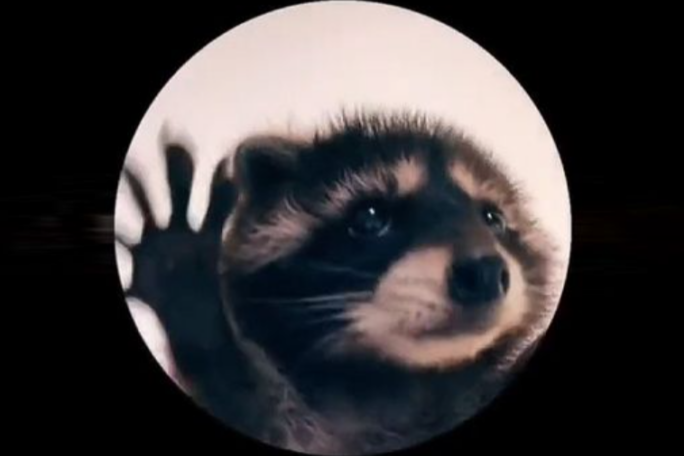
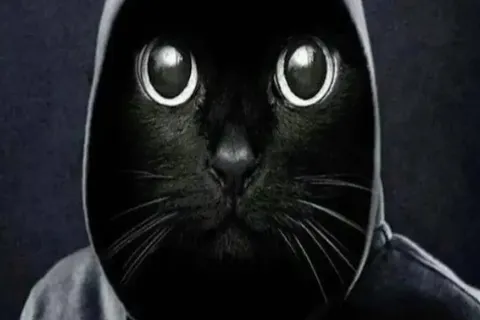
The catalog image shows only a close-up raccoon face set in a round frame on a black background. Unlike the video, the still file does not show the dance and does not confirm that this raccoon is the same animal from the original clip. It works as a recognizable character and a visual nod to the spinning trend, not as a documentary record of the animal.
Rhythm matters more than complex choreography
The raccoon’s looping motion matches the repetition of the name Pedro in the chorus. The spinning turns the animal into a little dancing mechanism, although the movements may be an ordinary reaction to the platform rather than a deliberate dance. User versions carried the song over to cats, people and other things that spin or sway to the beat. The meme works through rhythm, recognition of the sound and the mild absurdity of the repetition itself. The name Pedro does not describe the animal: it comes from the song’s lyrics and became a rhythmic hook.
The cheerful tone is tied to a good mood, but the original song is not about a raccoon; it is a separate piece with its own lyrics. One should not claim that the animal understands the name Pedro or dances on purpose.
In a still image, the round crop merely echoes the shape of the trend: it shows neither the platform nor what makes things spin. A caption can build on the associations with repetition and movement, but the file itself does not confirm any details of the original shoot.
Captions for circular motion
For example, a coffee cup slowly rotating on a table with the caption: “Me before the first meeting / me after learning it was moved.” The object’s turn matches the musical loop and shows a sudden improvement in mood. Another version is a fan on its lowest speed: “My plan for the evening: going in circles around one thought.” Here simple mechanics become a metaphor for rumination.
You can also show a dog turning toward a rustling bag: “Nothing was happening until the food was opened.” The song heightens the comedy of the instant reaction. All of these captions were made up independently; they have nothing to do with the original raccoon video.
Editing for the trend, and respect for animals
If you film your own version, a repeating movement and a recognizable piece of the music are enough; a complicated dance is not required. A round crop helps recall the original image, but an ordinary frame works too if the rhythm is readable. For a still picture, add a caption about what exactly started “spinning” or repeating.
Do not make an animal spin, get frightened or stand on an unstable platform for a joke. The spinning effect can be created safely in editing without putting a pet at risk. The round photo in the catalog likewise does not confirm the raccoon’s identity or the conditions of the shoot.