What's in the image
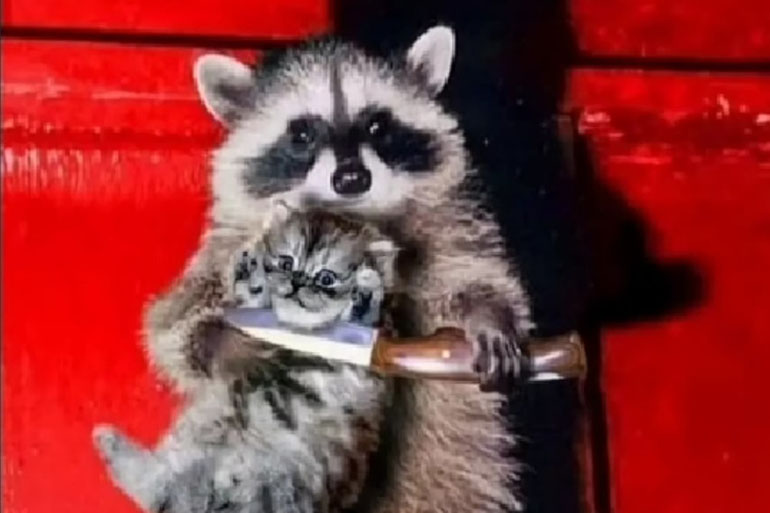
The picture shows a fluffy animal with a dark "mask" around its eyes holding a small figure in front of it, and its paws are gripping a long object that resembles a toy weapon. The red background and the close-up face give the scene a theatrical quality. This is a photoshopped or stylized version of the format, not real evidence of a threat to an animal. Other templates show a raccoon with a kitten and a knife, but this particular version looks different; you should describe what's actually visible rather than substituting the popular version for the image.
Blackmail as internet grotesque
The phrase is built as an ultimatum: the sender demands money be transferred, or the "fluffy one" will suffer. The comic exaggeration mocks spam, fake fundraisers, and emotional manipulation. The threat is deliberately implausible because it's being delivered by a cute animal in a cartoonish scene. Some well-known versions use a raccoon and a kitten; meme copies swap out the animals, objects, and the amount demanded. The format is usually associated with a photo composite where the animal holds a prop object and someone else's figure, though the original source of this particular image hasn't been identified.
The contrast between cute and menacing
The joke works when the character's appearance is endearing while the caption uses the vocabulary of a crime thriller. The raccoon looks serious, but the viewer understands it's staged. Similar memes use the same contrast: a cat "presents a bill," a hamster demands its sunflower seed back, a stuffed toy announces a "final warning." It's important to keep the scene clearly fictional, not to substitute real violence, and not to make real animals take part in a staged setup.
New harmless variants
"Send over one cookie, or the fluffy one will give you a disapproving look." "Pay for the delivery, or the raccoon will eat the whole pack of napkins." "Give up your spot on the couch, or the cat will sleep right on the keyboard." Here, the blackmail is replaced with a safe, everyday consequence, and the humor is aimed at a pet's cute persistence. For the image with the figure, you could change the caption to "he's demanding the remote back because his show just started." These are original examples, not instructions for extortion.
Recognizing real fraud
Although the meme is a parody, messages demanding money transfers and making threats shouldn't automatically be assumed to be a joke. If something like this arrives from a stranger or comes with personal data, verify the sender through another channel, don't open attachments, and don't transfer funds under pressure. The picture shouldn't be used to disguise a real fundraiser or to intimidate anyone. Also, don't publish images of real animals in dangerous situations to imitate the template. The parodic tone is noticeable from the staged look and the absurd caption; a real threat calls for a practical response.
The original device resembles a theatrical skit with toys: the viewer sees a token villain and understands in advance that the gesture of danger is staged. Nevertheless, repeated threats in correspondence with strangers can cause real anxiety, even if the sender is counting on it being read as a joke. Add an obviously absurd detail, like demanding "three crumbs be transferred," to make the parody clear. In a real fundraiser to help a pet, by contrast, provide transparent information about the animal and the recipient of the funds, rather than disguising it with a meme-style threat. The meme works through exaggeration, not a real threat; preserving that distinction matters especially when sharing the picture outside a circle of friends who already get the joke.