What is visible in the picture
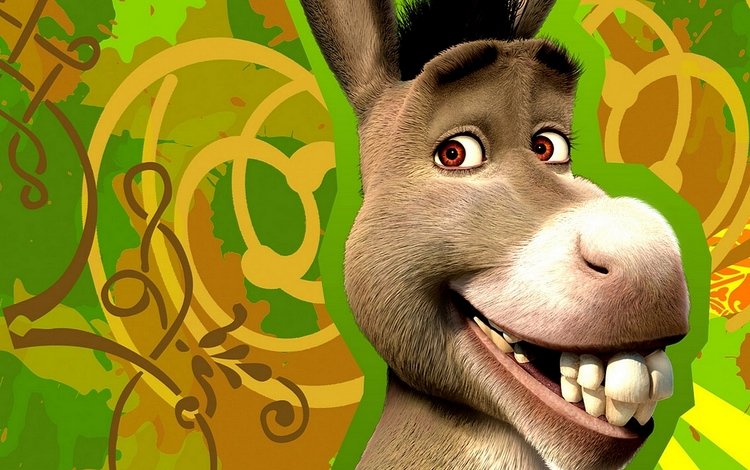
A close-up of the head of a gray-brown donkey with big ears and a short dark forelock. His eyes are reddish-brown and look sideways and slightly up. The donkey is grinning broadly, big teeth showing, and the muzzle is light near the nose. The background is green and yellow, with patterns and splashes resembling decorative painting.
This is Donkey, the chatty sidekick of the main hero of the movie “Shrek.” There is no caption in the frame, so the meaning is created by the facial expression and the bright background.
What is known about the origin
Where this reply came from is not reliably established: the first author and the first post are unknown. The formula can only be dated approximately, based on the fact that it is recognizable across the Russian-speaking internet and is used as a reply to a post.
The frame and the phrase came from different sources. The picture is from “Shrek,” while the formula appeared separately and later attached itself to the image. The link between them rests on a recognizable expression, not on the plot of the film.
How the line sounds and why it is funny
The base is “Keep me posted.” This is an ordinary polite phrase in which the other person asks to be told the news. In the meme version it is said where no news is wanted: a person reports something that interests no one, and the reply is a formal refusal to be interested, intensified with a crude addition.
The other person writes that they have produced something that induces yawning. Instead of a polite answer, a short signal is sent: there is no interest. The rudeness makes the signal noticeable, and the grinning donkey face adds a touch of feigned good nature.
The line needs no explanation. A single glance at the picture is enough to understand that the author of the post is not being listened to. That is why the template transfers easily to different topics, from film reviews to long reflections.
Caption variants
“Published four paragraphs about a new kettle. Keep me posted.” The caption first names the trivial thing and then adds the line itself: Donkey looks pleased, and this contrast makes the phrase funnier.
“Ran a poll that nobody took part in. Keep me posted.” The closing line turns the empty poll into a direct answer to the lack of interest.
“Keeps writing about a vacation that will only happen next year. Keep me posted.” The caption plays on expectation: a vacation sounds like an event, and the closing line shows that nobody is waiting for it.
“Asked what people think of my borscht recipe and got back a broad donkey grin: keep me posted.” The phrase at the end makes the irony obvious.
Where the template fits and where it does not
It works best among friends, in joking chats, and as a reply to self-deprecation: a post about a dull trifle that the author admits is unimportant. In such cases the rudeness remains a game.
Do not use the template in response to serious news, personal troubles, or messages from strangers: then the game turns into an ordinary insult. The joke relies on the addressee understanding the ironic tone, and the grinning donkey in the picture should soften the harshness rather than intensify it.
For a caption it is useful to keep the rhythm: first a short description of the post, then the line itself. Long introductions blur the effect, because the joke rests on bluntness and brevity. A good caption fits on one line and does not try to explain why the post is uninteresting.
In addition, the template works better when the post is really minor and harmless. If the subject matters to the other person, an ironic refusal sounds like contempt rather than a joke.