What the photo shows
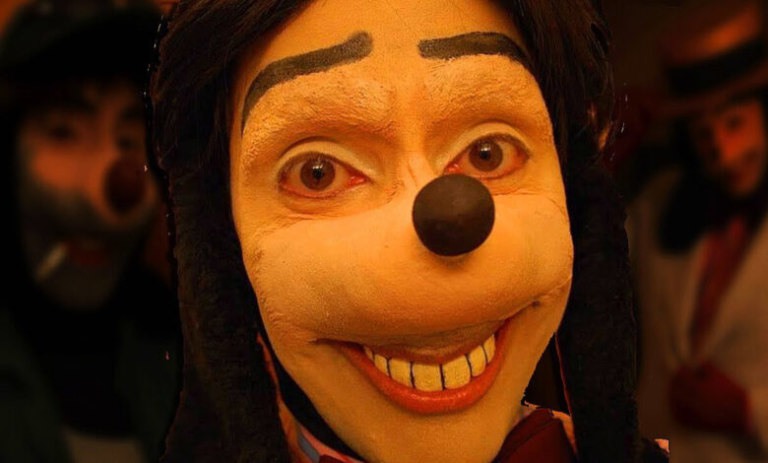
A close-up of a face in a mask: ochre-colored skin, a dark round nose, thick black eyebrows, reddish eyelids, and a wide smile with even white teeth. Dark strands hang down on the sides, resembling ears, and in the background other participants in makeup and costumes are blurred. This is not an orange “dog” in the usual sense, but a costume mask resembling Disney's Goofy.
The image is deliberately unsettling: the character's features are familiar from childhood, but on a living face they look wrong. This is the “uncanny valley” effect, and it is what made the photo recognizable.
For memes, such a picture is also convenient because it has no specific hero: there is no visible person behind the mask, so it is easy to take it as a symbol. Any caption is read not as a story about someone, but as a comment on a feeling of unease or awkwardness, and that is exactly what lets the frame be used in the most varied jokes.
Where the photos came from
According to reports, the photos were taken in 2012–2013 by their author, a cosplayer and mask maker named Samuel Kanini, known by the username Dusky Sam. In a statement reported in 2020, he said the photos and videos were his personal amusement and were not meant for anyone who wanted to scare or intimidate people.
Later the image spread across the internet as a “scary picture,” and the name “Jonathan Galindo” became attached to it on social media.
The summer 2020 wave
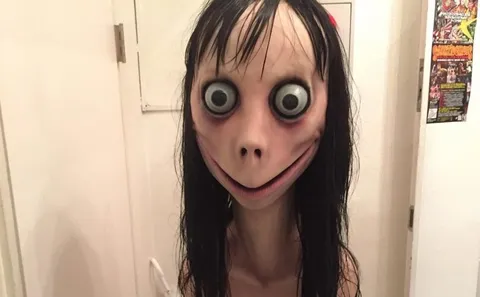
Starting in the fall of 2019, a profile with this name existed on TikTok, and then many copies appeared on various social networks. In the first days of July 2020, warnings spread on Twitter and other platforms: a person with this image was supposedly writing to teenagers, offering a “game,” and making threats.
This was often linked to the “Blue Whale,” a scary story from earlier years. However, as far as is known, there is no reliable evidence of an organized network or of real cases of harm connected with it. Many accounts were imitators who used the creepy image to frighten people.
Why the meme stuck around
The scary story intersected with the jokes familiar to the internet. On the one hand, warnings about strangers in private messages are not without sense. On the other, a creepy face is easy to turn into a comic picture: all it takes is a caption about everyday horror.
It is this duality that made the meme durable. The same frame serves both as a reminder to be careful and as an excuse to joke about one's own fears.
Caption examples
“When at 3 a.m. I remember an awkward phrase from five years ago.” The image turns into an intrusive thought.
“My fridge at midnight, when I look into it for the third time.” Light everyday horror.
“Notification: you have 47 unread messages in the work chat.” Fear of an overloaded messenger.
“When the exam ticket is one I didn't study.” A frightening image turns into a harmless joke that does not touch real people.
How to approach the template
If the caption refers to the scary story itself, stress that it is an urban legend: there is no confirmed data that a single organization stands behind it. It is best not to reply to strangers in private messages: simply block them, and those who received threats should tell family members or the platform's administration.
Do not use the picture against specific people: attributing the “Galindo” image to a person can look like bullying. The safest approach is to joke about abstract fears and awkward situations.