Two off-script moves
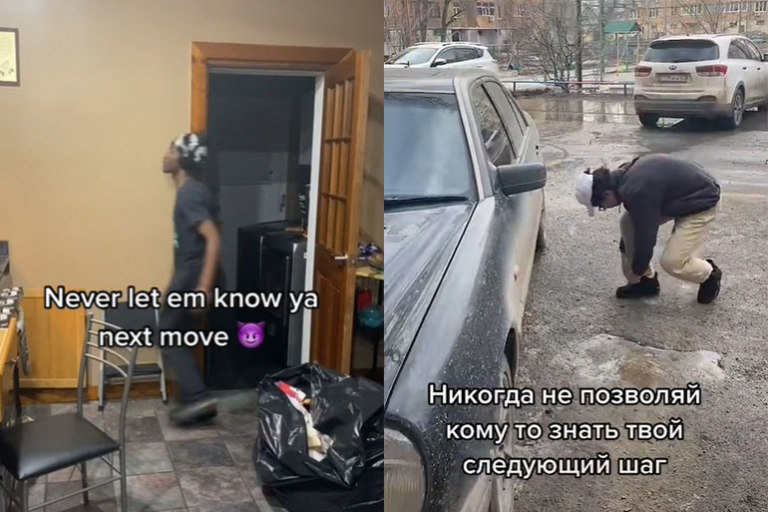
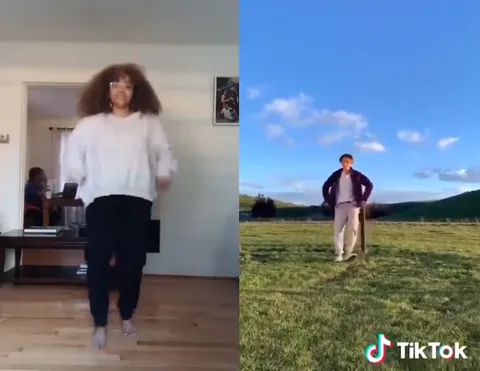
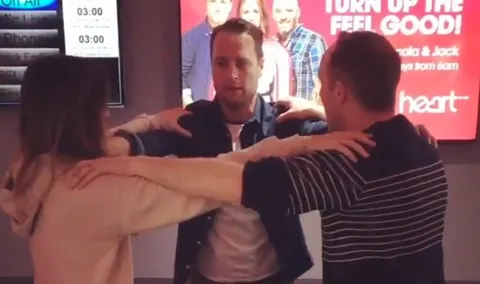
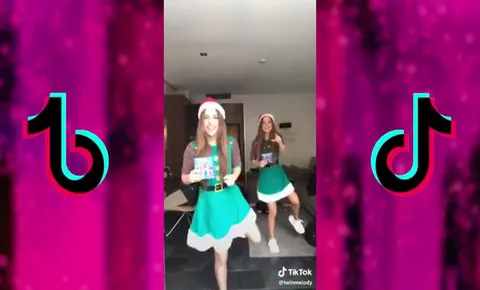
On the left, a person carrying a bag walks out of a building; on the right, a man unexpectedly bends down next to a parked car. Both shots carry a large caption promising that no one around will be able to predict the next move. The scenes may come from different videos and have been assembled into a collage: they shouldn't be presented as parts of one real story. Variety is part of the format: any action that breaks an obvious expectation can be paired with this familiar formula.
The clip and the catchphrase
The English-language formula "Never let them know your next move" spread through short videos in 2022. One of the frequently cited early clips shows a handshake through a car window, after which the driver simply drives off; the comedy comes from the viewer expecting the conversation to continue. Later, the phrase became a universal caption for unexpected, funny, or simply illogical actions. This particular diptych contains different scenes, so it shouldn't be taken for the original clip.
Breaking expectations
The viewer mentally builds a prediction: the person will probably carry out the trash, get into the car, or finish some ordinary action. Instead, the subject does something strange, sometimes utterly pointless. The caption presents impulsiveness as a cunning plan, even though the character may not be planning anything at all. The humor lies in this mismatch between "strategy" and randomness. Even the most ordinary gesture looks unexpected if the edit cuts it off at the right moment or shows an unfamiliar angle.
Ideas for your own versions
"A coworker sent a meeting invite. I reply three days later with a coffee-cup emoji" — a falsely mysterious next move. "Everyone expects me to cook pasta; I pull out waffles and announce a new culinary concept." For a more literal clip, you could show someone heading to the door, then suddenly turning back for their keys, which they'd been holding the whole time. New captions work best when the action is unexpected but stays harmless and easy to follow.
Where the joke stops
The format doesn't excuse dangerous pranks, threats, or deliberately causing confusion in work or relationships. The point is a fun subversion of expectation, not manipulating someone who's relying on you. The diptych doesn't confirm that the people shown deliberately took part in the trend or knew about the caption. Some early clips spread through reposts, and the exact priority of a given shot can remain disputed. It's better to describe the formula and the available trend history without pinning random scenes to unverified biographies.
The edit sometimes cuts the clip off at the most unexpected moment, leaving the viewer to imagine the outcome. In another version, the character successfully pulls off the strange plan, as if the people around genuinely couldn't have predicted it. These variations differ: one laughs at randomness, the other at mock cunning. If a caption describes a specific action, it should be safe and shouldn't require setting up bystanders or drivers. The formula can even work in a text message without video: first an obvious expectation is set up, then a wildly disproportionate response follows. The diptych already shows two examples of this — the trash bag and the sudden crouch by the car — and your own version works better when it picks an equally everyday, rather than risky, situation.