What's visible in the image
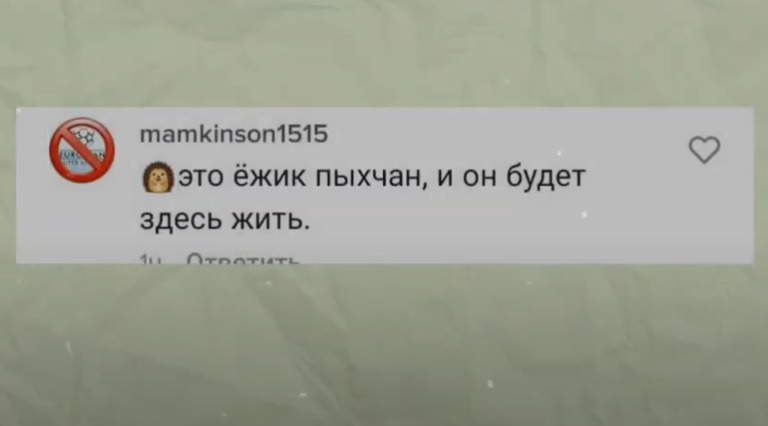
The screenshot shows a single comment on a light green background. To the left of the comment is a round avatar with a red crossed-out emblem, next to it the username, and on the right a heart icon for liking. The text itself starts with a small hedgehog emoji and continues with the words "this is hedgehog Pykhchan, and he's going to live here now." At the bottom, the timestamp line and the "Reply" button are cropped off.
The name of the comment's author isn't given in the article: it isn't relevant to understanding the joke, and the meaning rests entirely on the text and the emoji.
What's known and what couldn't be found
The phenomenon is described as a 2021 TikTok meme, kicked off by mass posting of the same comment. No confirming posts with a date, the author of the first comment, or a reason for the choice of the word "Pykhchan" turned up: searching the phrase mostly surfaces material about other hedgehogs — cartoons and emoji. So it can't be said with confidence who started it or under which video.
Only what's visible can be described: the comment template and the hedgehog image. The word "Pykhchan" sounds like a playful made-up name, and "going to live here now" sounds like an announcement that the character is staying in the comments permanently.
How the joke works
The main mechanic is repetition. The same text under different videos turns from an ordinary remark into a "phenomenon": the viewer notices that the hedgehog has "moved in" somewhere nobody invited it. The second mechanic is solemnity: "and he's going to live here now" sounds like an announcement about a new neighbor moving in.
The emoji at the start serves as the character's identifying mark: as soon as you see the hedgehog's little face before the text, you don't need to read any further — it's clear who it's about. Because of that, the phrase gets dropped under videos about literally anything: cooking, games, everyday mishaps — the comment looks equally absurd everywhere.
Example captions and comments
Example one: under a renovation video — "this is hedgehog Pykhchan, and he's going to live in your bathroom now." It works by swapping in a location while keeping the phrase's original rhythm.
Example two: "Hedgehog Pykhchan has come for your likes." A play on the character acting like a clingy follower.
Example three, under a pet video: "Pykhchan, whose are you?" A short version that shows the commenter is in on the joke while playing with the format.
Example four: "Hedgehog Pykhchan, come back, we forgive you." A joke about a pointless character becoming so familiar that people miss it.
How to use it
The meme lives in comments, not as a standalone image: on its own, the green background and crossed-out avatar say nothing, but as a screenshot captioned "this is hedgehog Pykhchan," it's immediately understood and fits well in roundups of "weird trends of 2021." It's best not to attribute it to a specific author or date: it's more honest to admit that waves of identical comments like this usually spread with no single originator — someone just repeats what already made others laugh.
Don't spam it into other people's discussions if the creators ask you not to — a joke about spam shouldn't turn into actual spam.