The gray figure with a hammer, and the laptop
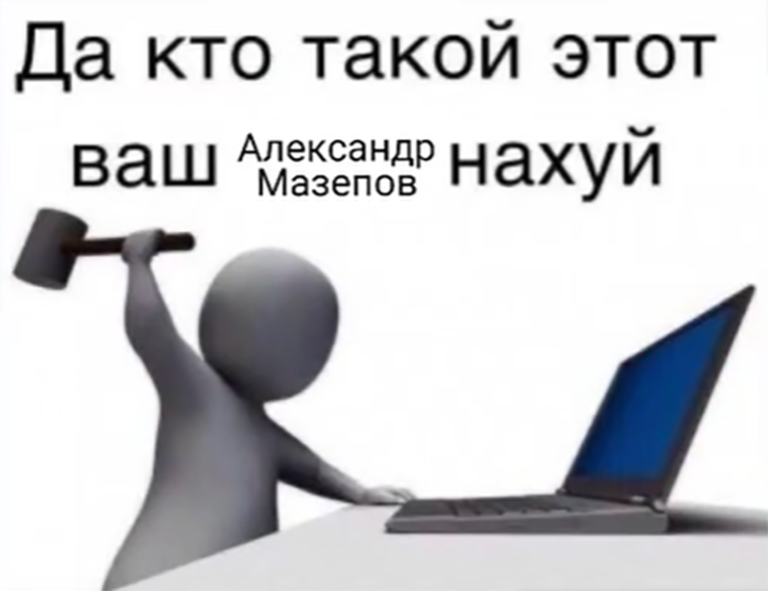
The image has a white background, large black caption text, and a simple 3D gray figure with no face. It's swinging a hammer over an open laptop with a dark blue screen. This is a stock image that's been used to illustrate frustration with technology.
The caption at the top is an irritated question along the lines of "who even is this guy." The wording contains profanity and isn't quoted directly. The name "Alexander Mazepov" is inserted in the middle of the sentence in small font, as if it had been slotted in later.
How the name came about
Not much is known. According to one breakdown, the trend arose on TikTok during a livestream: the streamer, together with viewers, used a random word generator and pieced together a made-up character from the results. Afterward, followers started leaving comments under other people's videos claiming Alexander was a legend who had done a lot for his generation.
The same sources note that real people with this name do exist, while the one being praised in the memes is most likely fictional. One actual bearer of the name tried to capitalize on the buzz, but didn't gain any real popularity. The sources don't give details about who posted the first video or exact dates, beyond a general "early June 2021," which remains unconfirmed.
The comments as part of the meme
The main "work of art" here isn't the image, but the stream of comments. Short, enthusiastic phrases, identical from one video to the next, create the impression of a mass cult. A passerby viewer who has no idea who's being talked about asks a question — and it's that question the laptop-smashing image is meant to answer.
The result is a kind of game: those in on it act like everyone knows who it is; those who don't, get outraged. Ask seriously, and no one will actually answer.
Related jokes
The trend belongs to a line of absurd TikTok "cults" that celebrate made-up people: sources name jokes about Azamat Aitaliev and Robert Mukha as similar cases. What unites all of them is one principle: the more pointless the reason for the adoration, the better the joke.
Example captions
Made-up examples in the same spirit, which preserve the effect without being insulting. "Everyone around is reminiscing about a legend, and I just wanted to find out the Wi-Fi password." The caption transplants the viewer's confusion into an everyday situation.
"Everyone in the chat is in awe of the guy who updated the spreadsheet. I'm the one who opened it first." Here the joke is about an everyday workplace "legend."
"When everyone in the family group chat suddenly starts praising Uncle Nick, and you can't remember what he's famous for." A familiar situation makes the faceless hero relatable.
In all these examples, the hero's identity stays a mystery, and the narrator's irritation or confusion is the only clear feeling. That's exactly why the caption needs to stay short: the more explanation you add, the less absurdity is left, and the whole force of the joke is that there's nothing to explain.
Why memes like this fade fast
Absurd cults like this stay alive only as long as a lot of people are playing along at the same time. Once the comments stop being unexpected, the charm disappears: the same gushing text under yet another video no longer surprises anyone. That's why the trend belongs specifically to early summer 2021, and the image with the figure remains as a trace of that game — good for moments when you need to express outrage at something baffling but trendy.
Caution with real people
The name matches that of real people, so it's best not to pin the joke on anyone specific, and not to use it against someone who actually has that name. The meme is fictional, and as long as it stays a game, it's harmless.