The event the phrase grew out of
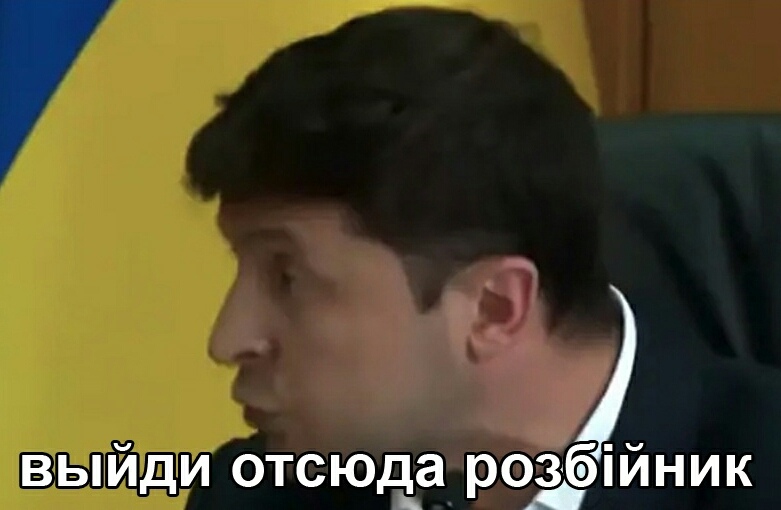
According to media reports, the episode took place on July 10, 2019, in Boryspil, Kyiv Oblast, during a meeting of Ukrainian President Volodymyr Zelensky with local authorities and activists. They discussed, among other things, funding for the city hospital. In the course of the argument, the president demanded that the secretary of the city council leave the hall, calling him a robber.
The video quickly spread online and became a topic of discussion. News agencies of the time linked the sharp remark to the official's past, which the president mentioned aloud. Details and motives differ across retellings, so what became the meme is the phrase itself, not the conflict around it.
What is visible in the frame
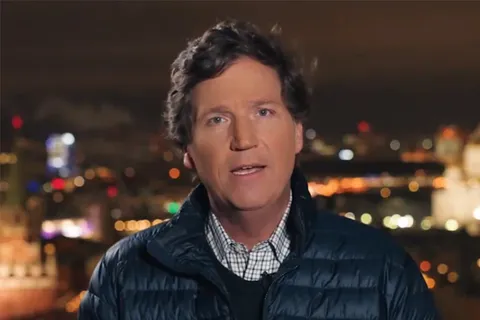
The picture prominently shows the profile of a man in a dark jacket and white shirt. Behind him are a yellow-and-blue flag and part of a dark armchair. Along the bottom is a large caption reading “vyjdi otsyuda rozbiynyk”: Russian words mixed with the Ukrainian spelling of “robber,” and it is in this form that the phrase is most often copied.
According to retellings of the clip, it sounded like “Get out of here, you robber!” Only the moment of the remark is visible within the frame. The full context remains outside it, so in memes the caption is often detached from the original situation and sounds like a universal formula for expulsion.
How the phrase became a template
The meme rests on a solemn tone and categorical delivery. The stern profile and even delivery turn any everyday trifle into an occasion for a loud verdict. The smaller the cause, the funnier the mismatch between the scale of the remark and the situation.
For the reader it helps to separate two things: the episode itself, which is confirmed by video recording, and retellings of the participants' motives. The meme uses only the remark and its intonation and does not require knowing the details of the dispute.
Examples of captions
Example 1: “My neighbor asked me not to drill the wall on Saturday. I politely replied: get out of here, robber, this is my apartment.” It's funny because of the contrast between a household situation and the solemn tone of the frame.
Example 2: “A cat took my seat at the table and looks as if it's the one paying for the internet.” The personification works, and the stern profile in the frame sets the required seriousness.
Example 3: “I asked in the chat not to spam. In reply, three messages about memes. Get out of here, robber.” The harsh formula sounds too loud for a minor cause, and that is why it is funny.
How to use the frame without distortion
The frame suits jokes about strict demands and abrupt exits from situations. Don't attribute invented accusations to a real person or present a joke as a retelling of an event, especially in a text about politics.
If you need to explain where the phrase comes from, two sentences are enough: place, date, and remark. That's enough, because the remark itself is short and easy to remember.
Captions work best when they are built on everyday situations. The frame conveys only the intonation of a demand, not the content of a dispute, and transferring it onto real people in private life quickly turns into harassment.
Captions where the menacing formula is aimed at something obviously harmless work well: a cat, a kettle, a neighbor's music. Then the solemnity of the remark becomes a joke in its own right, and the political context fades into the background and does not stop the meme from being read as an everyday reaction.