What the frame shows
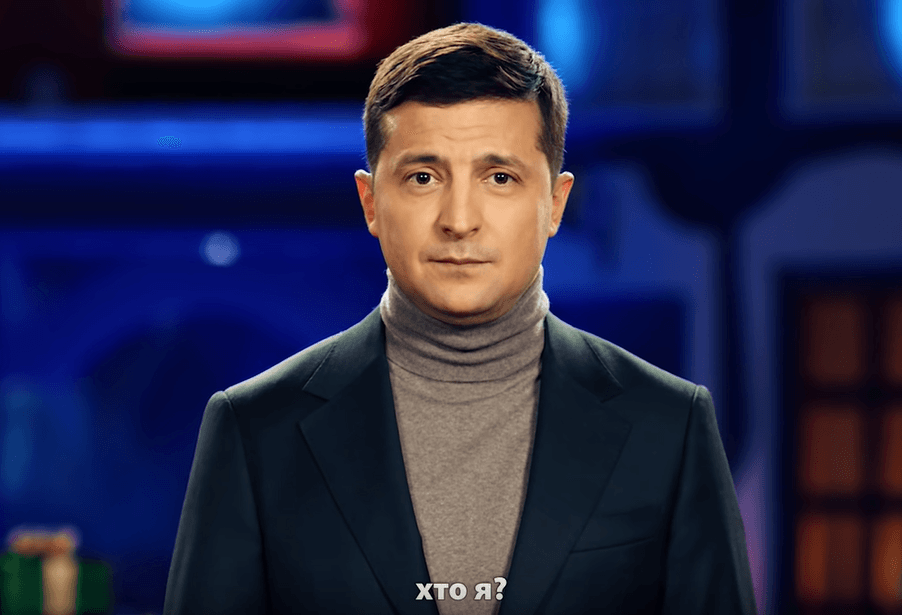
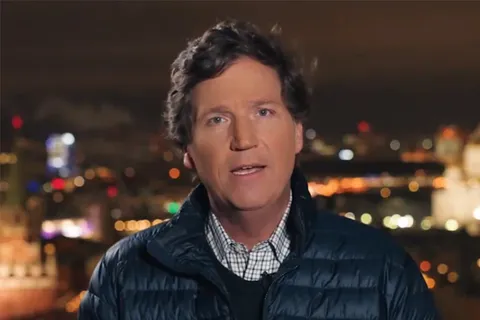
A man stands in the center of the frame, wearing a dark blazer and a gray sweater with a stand-up collar. His face is calm, his gaze is directed straight at the camera, his eyebrows are slightly raised, and his lips are closed. The background is dark blue and blurred, with glowing colored lights and, apparently, festive details: a wrapped gift is visible in the lower left corner. At the bottom, in white font, is a Ukrainian subtitle: «хто я?».
The pose and facial expression make the frame convenient for a meme: the man looks as if he is waiting for an answer to a question he has just asked. This pause and bewilderment turn the screenshot into a ready-made reaction.
What is known about the source
The frame is taken from a video address by the president of Ukraine. The caption «хто я?» in Ukrainian means “who am I?”, and the meme's humor rests on the question itself, torn out of context. The exact episode of the video, its date, and the order of the lines in the address are not established.
It is important to separate the meme's plot from the politician's actual words. The joke does not prove that the man in the frame said what the captions attribute to him: a caption is most often invented by the user, and the frame only suggests the intonation. Any interpretation of the figure's words or beliefs based on meme captions remains a joke.
Why the question works as a meme
The question “who am I?” is universal: it can be asked in a philosophical, everyday, or absurd context. Taken out of the video and presented as a single subtitle, it loses its original weight and becomes an “empty” template. The hero's serious look remains, and the contrast between the solemn delivery and the ridiculous occasion creates the effect.
The second device is the pause. The viewer sees the question and the calm face, but no answer is shown. The caption supplies the missing part: a story in which the person has got confused, forgotten what he does, or ended up in a ridiculous situation. The more absurd the situation, the stronger the solemn expression works.
Examples of captions
“I open the fridge at three in the morning and there's nothing new in it. Who am I?” The serious frame contrasts with a household trifle.
“I bought a gym membership and only go there for coffee.” The caption turns the question into self-criticism.
“Third day drinking tea from the same mug and I can't remember whose it is.” An absurd detail creates the comic effect.
“Work chats keep messaging me on the weekend. Who am I?” A joke about overload, where the question sounds like a response to what was endured.
How to use the template
The frame suits short captions above or below the image, where the question is asked in the first person. The subtitle already contains the main line, so any additional text should be brief: the situation and, if desired, a continuation of the phrase. Avoid captions that attribute real actions or statements to the person pictured, and do not use the template for insults: harmless self-irony works better.