A holiday character in an unexpected role
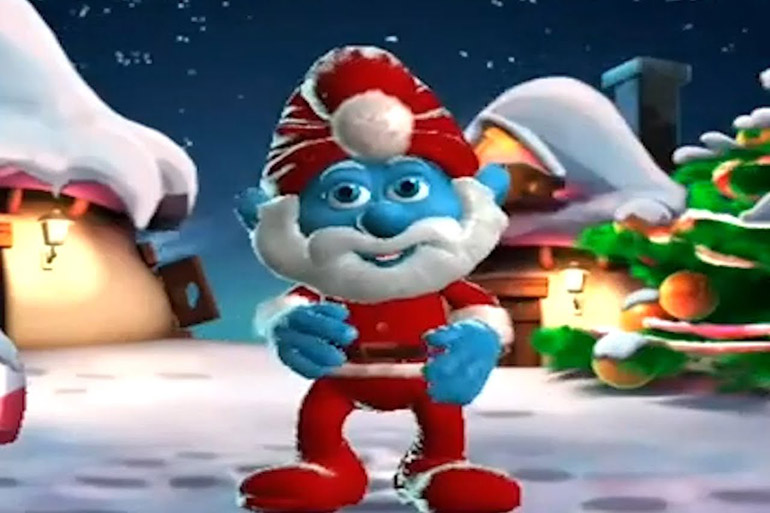
The image shows the recognizable Papa Smurf, a character from the animated universe about little blue village dwellers. The red hat and winter styling immediately evoke New Year's greetings, children's cards, and seasonal clips. The particular image's virality is tied to an animated video that users started forwarding as a standalone reaction. The clip began to spread in late 2016, but the exact first post is hard to establish: copies and reposts often don't preserve the original date.
The key effect comes not from a complex plot but from the sharp contrast between the good-natured character and the grim message. The phrase "There will be no New Year" sounds like an announcement of enormous importance, even though it usually accompanies some everyday disappointment. The template later resurfaced before holidays, with changed captions, cropping, and audio, while the meaning stayed recognizable. You can't confidently attribute the picture to a single author or treat any one copy as the original without the source file.
Why promising to cancel the holiday is funny
New Year is tied to anticipation of renewal, gatherings, gifts, and a shared ritual. That's why denying the holiday works as hyperbole: the author essentially cancels an entire calendar season over a single setback. The caption can convey exhaustion from preparations, lack of money, a ruined vacation, or a wish to avoid a noisy crowd. The cheerful character doesn't confirm that the figure is actually angry; he's used as a visual mask for an exaggerated reaction.
Additional dark or provocative jokes sometimes spring up around the phrase. These shouldn't be read as statements about real groups of people or as serious predictions. It's especially poor form to turn religious affiliation into an object of mockery: that's no longer playing with holiday expectations but directing the joke at people. It's better to aim the absurdity at personal plans, everyday chaos, and self-deprecation, where the context is clear without belittling anyone.
New captions for familiar situations
"When you remember you promised to make salads for fifteen people" — the picture signals sudden panic over the scale of the work ahead. "When your vacation got approved, but your boss scheduled a call for December 31" — the festive promise turns into a complaint about work reality. In both cases, the contrast between the smiling Smurf and the flat-out text creates the comedy without needing a long explanation.
A softer version also works: "The holiday's happening, but the big cleanup is cancelled." Here the character isn't destroying New Year, just canceling one tedious chore. Another example: "When you bought string lights, but the outlet's taken by the router." The caption should be short and instantly recognizable; if the whole context needs explaining, the meme loses its punch. The seasonal joke works best when it appears close to the holiday itself.
How to use the template carefully
The joke rests on the gap between the kindly Smurf and the blunt "there won't be," so it's better to pick a small-scale occasion: a canceled office party, a broken ornament on the tree, a delayed gift delivery. Don't use the same image to talk about a real loss or a cancelled event that actually matters — the festive character holds a light, theatrical tone, not a serious one, and it should be aimed at a situation rather than at a specific person or group.
For your own version, keep the visible part of the frame intact and leave room for text. Don't pass off an old repost as your own original, and don't claim a specific person coined the phrase if that can't be verified. The meme doesn't have to end on a refusal: "There will be no New Year... without a second dessert." A twist like that makes the anticipation absurd and brings the joke back down to everyday life, instead of locking in too bleak a reading.