The scene the phrase came from
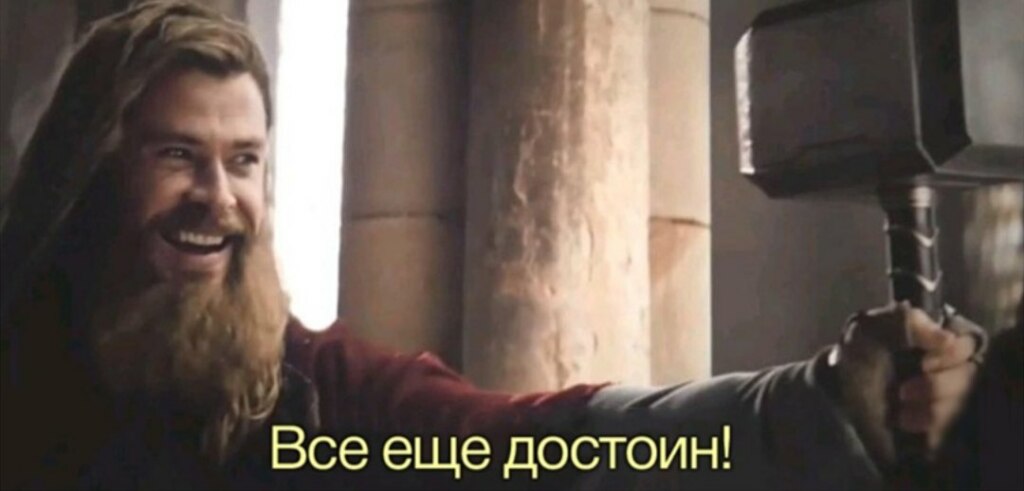
In Avengers: Endgame, released in US cinemas on April 26, 2019, Thor is in decline: he has lost his confidence and sunk low. In a flashback scene in Asgard, after a conversation with his mother, his resolve returns. He calls for his hammer, and it flies into his palm; the hero says joyfully in English, “I'm still worthy,” meaning “I am still worthy.”
The Russian version in the image is a yellow subtitle, “Vse eshche dostoin!” The translation is short and sounds almost like a slogan, so captions based on it are easy to remember.
How the clip spread online
A short fragment with this moment appeared online soon after the film's premiere, in spring 2019, and quickly turned into a template. Captions used it for stories about returning to old games, forgotten skills and reunions after a long separation. The exact date of the first meme and its author are unknown, so it is best not to name a first post.
The secret of its popularity is that the line is universal: it is not tied to a specific fictional universe and is understood even by someone who has not seen the film. A picture of a happy person with a hammer and one line saying that something long forgotten still works is enough.
What the reaction means
The meaning of the phrase is not pride but relief. The hero checks himself and gets confirmation. That is why the frame fits situations where a person unexpectedly remembers an old skill or realizes that they can still be trusted.
The joke rests on the contrast between a long break and a confident result. For example, a person returns to a game after years and clears a hard level without hints. Or they remember the password to their home network, which they have not used for many years.
The line works without explanation: tone and gesture are enough, so a caption can be built on almost any story about returning to an old task. What matters is not the accuracy of the film plot but the idea that you are still in your place.
What is visible in the picture
A man with long light hair and a reddish-brown beard smiles broadly and looks away from the camera. He wears dark red clothing, and his arm is extended to the right, holding the handle of a hammer. The hammer occupies the upper right corner: a dark rectangular head and a handle wrapped in leather. The background is gray-brown, with stone columns and a light opening on the left.
The yellow subtitle sits at the bottom center. The character is recognized by the hammer and costume, and for the joke it is the character that matters, not the actor who plays him. The face shows pure joy, and this openness helps captions about small victories.
Caption examples
Three examples on the theme of a returned skill.
“Opened an old chat from 2014 and realized I still remember how to answer jokes.” Here the joy of a discovery turns into confidence in one's own memory. The hero's smile and the hammer set a triumphant tone, and an ordinary chat becomes a small feat.
“Ten years later I remembered how to solve an integral and didn't even glance at my notes.” The contrast between the time elapsed and the ease works like this: a long break looks like a trial that was passed without effort.
“Hadn't logged into email for six months, and the password worked the first time.” The caption uses a small victory. The more mundane the situation, the stronger the effect, because the phrase sounds like a speech from a heroic episode.