The caption and the frame
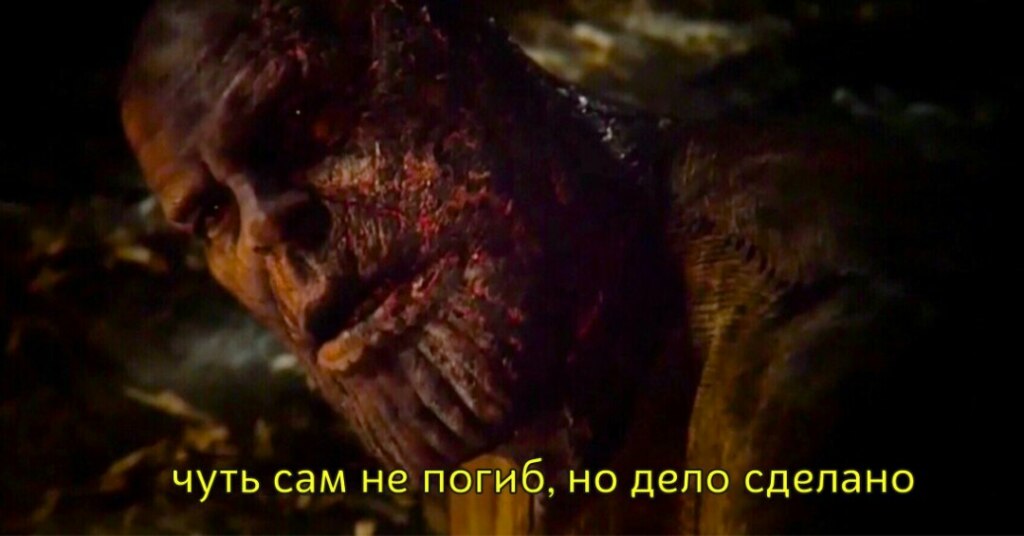
The frame is dark: almost all the space is taken by a large face shot at an angle, with the head tilted down. The skin is covered in dark and red patches, as if smeared with blood and soot, and the folds and rough texture are visible. Along the edges are blurred shadows and dim glints that look like earth or debris. Yellow letters run along the bottom as a subtitle, and the meme rests on this line.
By the skin color and the shape of the chin, the character is recognizable as Thanos from the Avengers films. The exact scene and the origin of the Russian subtitle cannot be determined from the frame itself, and no reliable confirmation has been found, so the text below does not claim which scene or whose words the line comes from.
What the phrase means
The meaning lies in the smug ending. The speaker admits to a serious danger and then cuts it off with a short proud phrase, “the job is done.” The shift from drama to satisfaction is what makes the caption funny. The danger can be anything, from a thunderstorm to a crush at rush hour; the main thing is that the outcome looks more modest than the risk described.
The intonation of a terse report is also important: no details, no excuses. The person seems to be coming back from a battlefield, when in reality they went shopping or fixed a faucet. The more serious the face in the picture and the smaller the reason in the caption, the more noticeable the gap.
Four captions
Examples on everyday topics. In every case the phrase sits under the frame as the conclusion.
“Missed the train, but found a shortcut across the tracks. Nearly got myself killed, but the job is done.” The dramatic wording applies to an everyday risk, so the contrast is visible at once.
“Ran five kilometers without warming up and made it to the door. Nearly got myself killed, but the job is done.” The caption mocks overconfidence: the scale of the risk does not match the feat, while the tone stays serious.
“Moved the wardrobe alone and didn't tear my shirt. Nearly got myself killed, but the job is done.” The joke hinges on a turn: a minor achievement is presented as an escape from catastrophe.
“Submitted the report one minute before the deadline, and half of the text is in it. Nearly got myself killed, but the job is done.” The trick is the same: a grand phrase stands next to a very modest result, and the difference between them creates the comedy.
Why the caption works on this frame
The dark image and the tormented face set the tone of a heavy episode, so the subtitle sounds almost like a verdict. The gloomier the picture, the more noticeable the contrast with an everyday chore. The pause before the word “but” also matters: it makes the phrase convenient for parody, because it is easy to carry over to any situation.
The yellow subtitle at the bottom of the frame adds the feel of an amateur film or clip translation, and this is also part of the genre: the text looks like a line the hero says aloud, although in fact the caption is written by the meme's author.
When the phrase fits
The caption suits stories about minor feats that look more serious than they were. Do not use it for real tragedies or dangers that a specific person has actually survived: then the joke becomes mockery of someone else's misfortune. In other cases the frame and the text work as a good pair.