The sculpture came before the legend
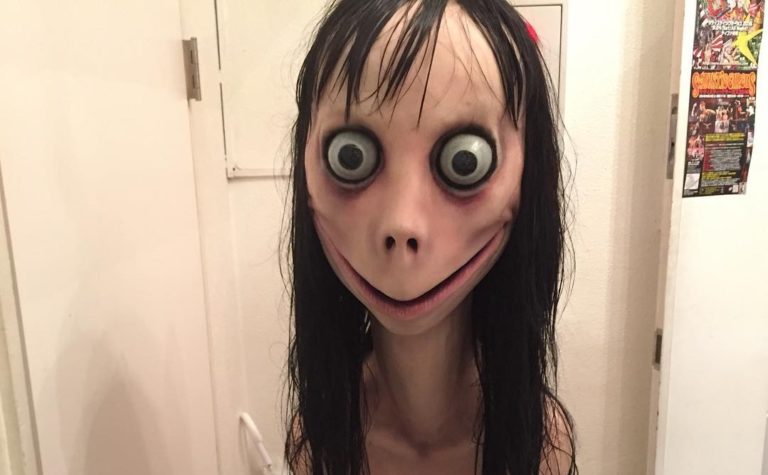
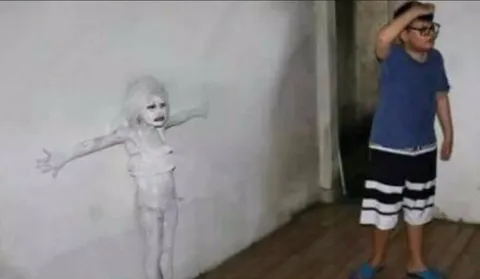
The character grew out of the work “Mother Bird,” created by Japanese artist Keisuke Aiso. In August 2016 the sculpture took part in an exhibition at Tokyo's Vanilla Gallery. The full figure combined a female appearance with birdlike features, including legs. Photos of visitors began circulating already in the exhibition context; this was a physical art work, not a creature invented by a messaging app.
In the summer of 2018 the cropped photos acquired the new name Momo. The frightening face was used in stories about mysterious contacts on WhatsApp and threats supposedly tied to correspondence. The following year the wave of rumors was accompanied by stories of a “challenge.” These claims relate to the urban legend around the photos. Aiso himself, in a 2019 interview, separated his work from the internet hoax and said that the sculpture had by then already been disposed of.
What makes the face unusual
The photo shows the upper part of the figure: long black hair, large round eyes with contrasting pupils, a narrow nose, and an extremely wide smile. Behind are a light wall, a door, and a poster. The gallery surroundings are calm and ordinary, while the face breaks familiar proportions. It is precisely the juxtaposition of an everyday room with an impossible appearance that makes the portrait especially disturbing.
The bird legs are absent in this frame, so without knowing the full sculpture a viewer may take Momo for a doll with a human body. The name is not printed on the image; recognizing it depends on the familiar face. The frame does not show a phone, messages, or participants of the internet legend. These meanings appeared around the photo later and are not its literal content.
From fear to comic recognizability
At first the image works as an unexpected appearance: the big eyes seem to stare straight at the viewer. But with repeated use, the frightening look becomes a recognizable sign. Authors begin comparing it to a failed selfie, excessive curiosity, or a face after a sleepless night. The same wide smile reads now as an awkward attempt to look friendly.
Such a transition does not require re-explaining the legend. A meme can use only the portrait and a short caption suggesting an everyday reason for such a strange expression. In photo remixes they change the hair, the surroundings, or the proportions, but keep the eyes and mouth as the character's signs. If both of these elements are removed, the remake loses its connection to Momo and turns into a separate scary doll.
Three imagined encounters
The invented example “The front camera turned on by accident at three in the morning” turns horror into self-irony about an unflattering angle. The contrast between the expected own face and the frightening portrait creates a brief surprise. Another variant: “When I said I had a secret and my friend leaned closer.” The huge eyes become the exaggerated attention of an interlocutor, and the smile becomes impatience to learn the details.
A third plot: “I'm trying to smile friendly in the photo for my pass.” Here the meme mocks the gap between intention and the result of a posed portrait. The light wall already resembles the neutral background of an official photo, so no additional editing is needed. All these cases are fictional; they use the sculpture's appearance as a conventional mask for the narrator and do not continue a story about a real dangerous contact.