The scandal gets a face
In spring 2018, Facebook found itself at the center of the Cambridge Analytica story and the misuse of user data obtained through apps. In a March statement, the company acknowledged a breach of trust and announced changes to access to information. This backdrop made the old jokes about surveillance especially understandable. A huge data-collection system got a human face in memes: Mark Zuckerberg, a character who supposedly notices every little thing personally.
One of the well-known early posts in the format appeared on r/MemeEconomy on April 5, 2018. A notification from Mark Zukerburg cut into the romantic conversation shown in the image: the sender reported something they could only have learned from another conversation. The deliberately wrong surname emphasized the parody. The picture was reposted and remade, turning the founder of the social network into a commentator on other people’s secrets. This is a known trail of distribution, while the name of the format’s first creator has not been established.
A smile instead of a notification
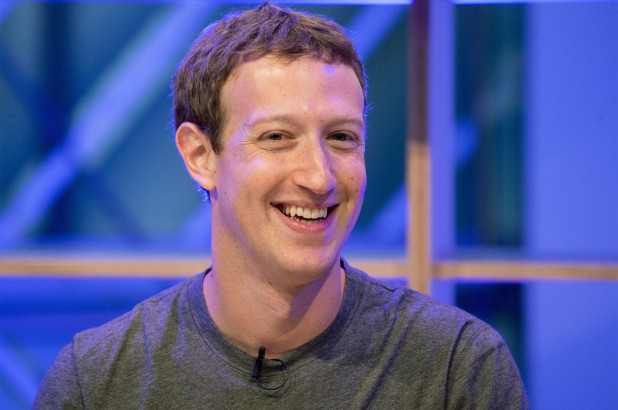
This is a single portrait of Zuckerberg. He is smiling and wearing a gray T-shirt with a small microphone at the collar; behind him are blue stage decorations. The picture contains no messenger window, no message, and no promise to watch the user. The portrait represents a recognizable participant in the joke, and the full format appears when his name, photo, or a pop-up comment is added to the conversation. The date and circumstances of this particular shoot have not been established.
An uninvited interlocutor knows too much
At the start there is usually a completely ordinary conversation between two people. The last message changes its structure: it turns out another listener was there all along, one able to connect different conversations. His intervention may be helpful, friendly, or offended. It is exactly this homely tone that is funny: the owner of a huge platform behaves like a neighbor who accidentally overheard an argument through the wall.
The joke moves the question of data access into recognizable social awkwardness. The user has not yet had time to think about the technical side before being corrected in front of their conversation partner. Hence the assistant’s ambiguity: he can expose a deception and at the same time prove that he was present where he had not been invited. In the fictional dialogues, Zuckerberg’s knowledge is almost magical; they are not evidence that a real person reads every private conversation.
Three messages from an imaginary messenger
Two friends arrange a meeting. The first writes that he left home long ago, and the second promises to wait by the metro. In the invented notification, Zuckerberg remarks: “He just asked in another chat where the second shoe is.” The last line destroys the convenient story about being late and exposes an observer who has connected two unrelated conversations.
In another scene, a member of a book club claims to have finished the novel but does not want to discuss the ending so as not to spoil it for anyone. Zuckerberg inserts: “Yesterday you asked for a summary of the first chapter.” The meme assistant performs a useful exposure in a completely inappropriate way. For the joke, what matters is the link between a private question and a public claim of certainty.
The third fictional dialogue changes the mood: a person praises a new calendar and writes to a friend that now they forget nothing. An offended message surfaces: “And you moved my birthday to tomorrow again.” The all-knowing character suddenly demands personal attention. Technological anxiety gives way to an absurd friendship with the owner of the service, who has decided to take part in someone else’s everyday life.