How a community chose the most ordinary symbol
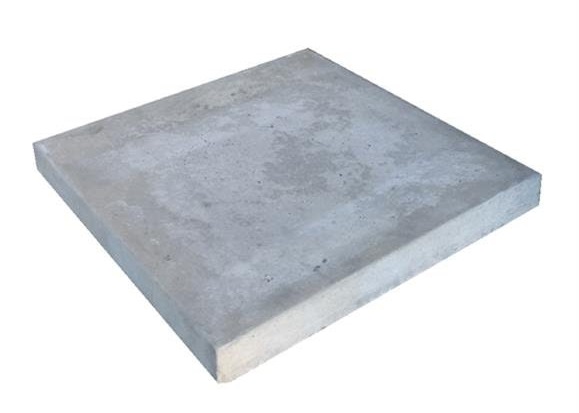
The well-known story begins on January 20, 2018, in a fan Discord around the apandah YouTube channel. Participants discussed the lack of interesting new memes and decided to promote some deliberately unremarkable object. The choice fell on the image of a square concrete slab. Users changed names and inserted the object into remakes. Two days later apandah responded with the video “a literal concrete slab”: the community's initiative preceded the channel author's video.
A second notable wave dates to May 24, 2018. User IoI_xD proposed in r/me_irl to collectively turn the slab into a meme, after which new variations appeared. The January idea and the May spread are linked by a shared notion of deliberately promoting absurdity. The author of the slab's photograph itself is unknown. For the meme's history, what matters is that fame was created through repetition rather than through an unusual event caught on camera.
An object without a face, action, or caption
The image shows one gray square slab lying on a white background. The angle reveals the rough top surface and two side faces. There is no person, no inscription, no surrounding landscape, and no scene of laying it. This isolation resembles a product photo: attention is focused on the object's form, although its size and origin cannot be determined from this frame.
It is precisely the absence of an event that makes the picture suitable for the concept. An emotional face would already suggest a reaction to the viewer, and an incident would suggest a small story. The slab has almost nothing to retell. All its expressiveness arises later, when it is placed in the spot of an expected character or answer. The gray square is easy to recognize even at a different size; the white background lets you mentally separate it from any new scene into which the object is inserted.
A joke about how jokes are made
A typical reaction meme uses an already noticeable facial expression or line. The slab reverses this familiar link: the object is chosen before it acquires a convincing meme meaning. Participants demonstrate that recognizability can be created by agreement and persistent repetition. The viewer laughs not necessarily at the concrete, but at the shared willingness to treat it as a significant cultural event.
In a familiar template, the slab can replace a prize, a beloved hero, or an object of admiration. The substitution itself breaks expectations: the place of a bright resolution is taken by an immobile construction item. On repeated encounters another layer appears. A person starts recognizing a gray square he would not have noticed before and becomes a participant in that very collective game. The more serious the frame around the slab, the more visible the gap between its ordinariness and the importance assigned to it.
Pedestal, job interview, and the long-awaited gift
In an invented remake, three places on a sports podium are occupied by famous heroes, while the gold goes to the slab. Another invented variant depicts a job interview: the candidate lists diplomas and experience, but the employer is delighted by the gray square. Both plots build on the undeserved elevation of an object. The slab does not prove superiority, and the very seriousness of the victory makes the absurdity visible.
For a third variant one can imagine a solemn unboxing of a gift: a person dreamed of an expensive device, and inside lies a concrete slab with a congratulatory ribbon. Here it works as an utterly down-to-earth punchline. In another context the same object might signify stability, heaviness, or boredom, but such meanings arise from the new caption. The original meta-meme ties these disparate remakes together with a shared joke about how the internet can build a cult around a perfectly ordinary thing.