What's shown in the picture
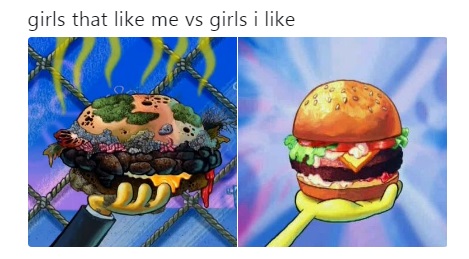
The image is split into two halves, captioned at the top: "girls that like me vs girls i like." On the left is a messy, badly overgrown burger held by a yellow hand with dark outlines. It's covered in an untidy mass from which tufts of greenery and dark growths stick out, giving the whole thing a neglected look.
On the right is a neat, appetizing burger with a sesame bun, a juicy patty, a slice of cheese, a tomato, and lettuce leaves. It's held by the same hand against a backdrop of pink sunrays. The contrast is obvious: one half looks unpleasant, the other tasty and appealing.
History and origin
The first known publication of this format appeared on Twitter on July 24, 2014. Its author contrasted a model in the branded uniform of a popular restaurant chain with a larger-bodied woman wearing the same outfit. The structure itself, in which two images are contrasted as "those I like" and "those who like me," was later repeated by many users in a similar style.
On September 19, 2017, another user posted a version with two models in swimsuits, and the post gathered more than four thousand likes within a day. That same day, one of the women in the photo responded publicly, and her brief tweet gathered around eight hundred thousand likes. It was precisely this reaction that made the format widely known and turned the picture into the subject of a debate about how jokes about appearance affect real people.
How the meme is used
In its classic form, the meme contrasts an idealized image with a caricature of who might be interested in the author. The joke is built on self-deprecation: the narrator admits his affections go unreturned, and the choice between "the desired" and "the real" looks ridiculous.
Over time the format stopped being tied to real people. It began to be applied to cartoon characters, food, and objects, while keeping the comparison structure intact. This made the joke safer and shifted it from judging appearance toward metaphor, but the underlying setup, where the contrast is what matters, remains the same.
Why the meme sparked controversy
The format has often been criticized for reinforcing a judgmental view of women, reducing them to appearance and body size. Even a joking take on it is perceived as objectification, especially when the joke targets real people who never consented to being part of it. The response from the woman in the photo became an important example of how a public reaction can change the way a meme is perceived.
The version with the SpongeBob burgers looks gentler, because it doesn't direct insults at specific people. This is exactly what allows the meme to stay popular: it retains a playful character, and the comparison is built on an absurd contrast rather than on real portraits. At the same time, users often change the captions, and the meaning of the template shifts from self-irony toward mockery of others, which is what keeps the format controversial even today.