What the two frames show
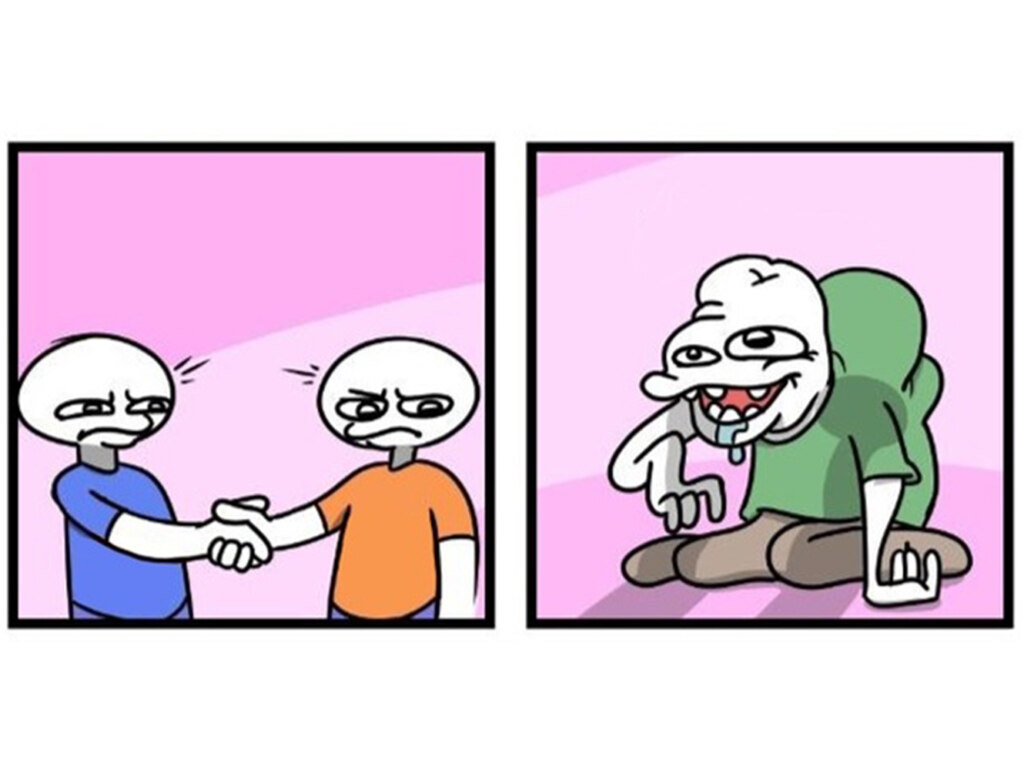
In the left panel, two characters with round white heads and identical expressions: eyes narrowed, brows knitted, mouths pressed shut. One wears a blue T-shirt, the other an orange one. They shake hands, and short strokes drawn beside their heads heighten the sense of a tense meeting. The background is pink.
The right panel shows a third character. He wears a green T-shirt and brown trousers, sits on the floor, leaning on one hand against the floor and pitched forward. His mouth is open, drool is running from it, and his gaze is unfocused. Unlike the first two, he is drawn crudely and grotesquely. One panel change and one new character: that is the entire plot.
The origin is unknown
The author of the comic, the year of publication, and the series the panels come from are not established. Similar drawings with handshakes and other characters exist, but they do not match this frame, so it cannot be linked to them.
The character is drawn, and should not be connected with real people, even if similar captions circulate online. What matters is what the picture shows: two frames, two states, and one unexpected guest.
How the joke reads
The comic is built on expectation. First, two characters display a wary agreement, and the viewer assumes the scene will be about an alliance, a deal, or a rivalry between equals. The second panel breaks that expectation: a creature appears who clearly does not fit into this serious conversation.
In typical use, the three characters stand for three concepts from one field. The first two get “serious” labels, while the green one is assigned whatever is considered strange, superfluous, or awkward. The caption sets the roles, and the drawing simply pushes them to the extreme.
What is funny is not the character's appearance itself, but his arrival right after a dignified handshake: a serious deal looks even more important when someone who understands nothing is sitting right beside it.
Examples of captions
The examples are written for this template: the first two characters set up an alliance, and the third appears as a nuisance.
First two: “customer support” and “sales.” Green: “documentation nobody has ever opened.” The expectation of working together collapses in the last panel, and the joke rests on a recognizable everyday situation.
First two: “work” and “rest.” Green: “the weekend to-do list.” The twist is ordinary: rest does not save you from the to-do list.
First two: “frontend” and “backend.” Green: “the check the day before the release.” The joke is aimed at people who work in this field, and it is recognized quickly.
Be careful with real people
The template is handy for concepts and work situations, but not for offensive captions about specific people. If the green character is given a real name or attributed someone's trait, the joke stops being about the plot and starts to hurt a living person.
The grotesque here is a property of the drawing, not an assessment of appearance. It is especially worth avoiding captions that turn the crude drawing into mockery of an illness or disability. Keep the captions at the level of a role, an action, or a situation, as in the examples above. Then the joke stays a joke about a situation, and no one ends up in the green character's place.