What's shown
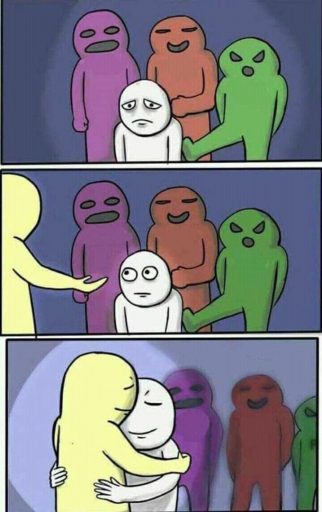
The comic consists of three panels. In the first, a little white figure with a sad face stands between three shapes: a purple one with an empty stare, an orange one with a wide grin, and a green one with an angry expression. Each of them presses in on the character, symbolically conveying the pressure of problems and stress.
In the second panel a yellow shape appears and reaches toward the character, and his gaze turns surprised. In the third panel the yellow shape hugs the little white figure, while the former tormentors recede into the shadows in the background.
Meaning of the metaphor
The comic works as a visual metaphor for an inner state. Color and facial expressions convey different types of difficulty: anxiety, pressure, and irritation. Such images help make abstract stress visible as concrete characters.
The ending shifts the theme from struggle to support. The hug symbolizes people nearby who help you cope rather than merely watching from the sidelines. That's why the comic is perceived as a story about support, not only about hard times.
History and origin
The comic belongs to the genre of simple drawn stories that spread across social media as images with short phrases or no caption at all. It appeared on the Russian-language internet around 2017. The exact author and first publication are not established.
Similar comics with colorful characters representing emotions regularly appeared in English- and Russian-language communities. This is a format that's easy to copy and remix, so different versions often blend into one recognizable scheme.
Spread and usage
The image was usually used as a reaction to hard days, when it feels like problems are closing in from every side and support arrives only at the last moment. The image is convenient in messages and posts because it conveys an emotion without a long explanation.
The meme often appeared alongside texts about mental state, exhaustion, and burnout. It matters that the humor here is gentle: it doesn't mock these feelings or dismiss them, but shows that help may be close at hand.
Why the comic is memorable
Simple shapes and contrasting colors make the characters recognizable at a glance. The minimalist graphics let you grasp the plot and each character's emotion quickly, which matters for an internet format where people scroll past an image in seconds.
The comic remains an example of how a simple drawn story can speak to complicated feelings. Its popularity is explained by the fact that many people recognize their own experience in it: being surrounded by problems and the sudden relief of support.
It's worth noting how carefully the composition is built. The second frame almost repeats the first, but the appearance of the yellow shape changes everything: the viewer first sees the familiar pressure, then anticipates what comes next, and in the finale gets an unexpected turn. This device makes the short comic feel like a tiny story with a setup and a resolution.
For readers, the comic is also useful because it can be read in different situations. Some see in it a reminder about friends and loved ones, others take it as support for themselves. In this sense the image is universal and easily resonates with a very wide audience.