A lesson in imagination in Detroit
The Quantic Dream game came out on PlayStation 4 on May 25, 2018. One of its characters, the android Markus, helps an elderly painter named Carl. In the studio scene, Carl suggests he go beyond copying visible objects: imagine what he has not yet seen and express it on canvas. For a story about androids, such a task matters, because creative choice shows the hero's independence.
The player chooses the direction of the painting, so the result of the scene can vary. In memes this variable part was replaced with the creators' own images. Among the early known remakes are Tumblr posts from early June 2018; soon the format spread to gaming communities on Twitter and Reddit. On June 5, video versions by Grandayy and Dolan Dark appeared. The cinematic scene allowed a serious dialogue to be preserved, and then abruptly show someone else's picture instead of the game's artwork.
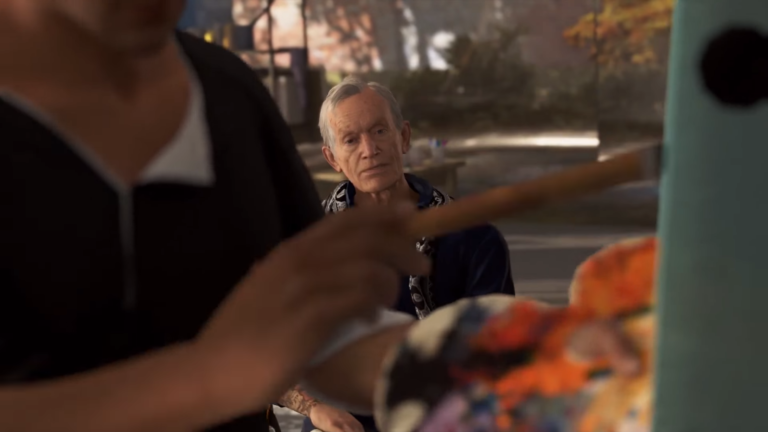
One frame before the result
In the image, Carl sits in the depths of the studio and looks attentively ahead. His face is centered and in focus. In the foreground, part of Markus's figure is blurred, along with a hand holding a brush and a palette of bright paints. On the right, the edge of the canvas is visible. The warm light and calm setting preserve the feeling of a genuine painting session.
There are no four panels here, no subtitles, and no already inserted joke painting. This is a fragment of the original scene from which a sequence can begin. The arrangement of planes explains the characters' relationship: Markus works at the canvas, and Carl observes him. The image still keeps the result beyond what is visible, so it holds the anticipation of a future reveal well.
The impossible as exaggeration
A full meme usually passes through three semantic steps: a request to create the impossible, the presentation of the picture, and Carl's reaction. In the game, imagination means the ability to invent something new. In the remake, the word “nonexistent” becomes a mockery of what the author has long been unable to encounter: a calm chat, a clear instruction, or a vacant spot. The viewer recognizes a personal complaint hidden inside what seems like a philosophical exercise.
The artist's surprised reaction acts as a seal of recognition. Even a simple object receives the status of a discovery if Carl looks at it with serious amazement. That is why the image on the canvas can be deliberately mundane. The less it resembles a fantastic creature, the clearer the comic conclusion: the impossibility lies not in the nature of the object but in the experience of the person who came up with the caption.
Three imagined paintings
The first invented result is a family group chat in which all messages concern one question. Markus supposedly depicted an incredible discipline of correspondence, and Carl is stunned by this achievement. The second scenario shows a bag of identical socks after laundry. Here the extraordinary element is the perfect matching of pairs, although the picture itself looks dull and familiar.
The third variant is a short instruction that actually explains which button to press first. Serious astonishment turns good documentation into fantastic art. These invented examples use different objects but one and the same sequence of anticipation and revelation. If only Carl's frame were left, the meaning would depend on the caption; the added canvas lets the reader see the specific reason why the hero seemingly cannot believe his own eyes.