After the quarterfinal in Sochi
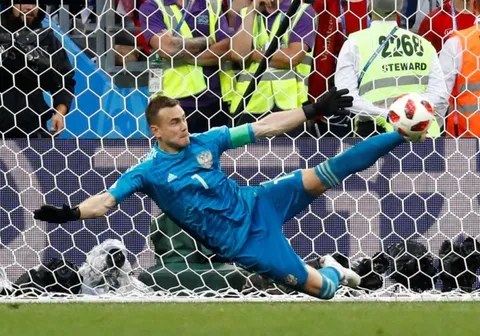
On July 7, 2018, the Russian national team met Croatia in the World Cup quarterfinal at the Fisht Stadium in Sochi. The game ended 2:2 after extra time, and Croatia won the penalty shootout 4–3. For the Russian team, the tournament was over. Shortly after the match, forward Artem Dzyuba spoke with a Channel One journalist, and this interview provided the material for the future reaction.
The footballer thanked teammates, fans, and people who had supported the team. During the conversation he could not hold back tears. The original scene is therefore connected both with disappointment over the result and with gratitude for the shared experience. In meme captions the sporting occasion could be replaced, but the tone of farewell remained. Viewers were no longer shown a moment of struggle for the ball, but a person trying to express his attitude toward a finished story.
Emotion against the press backdrop
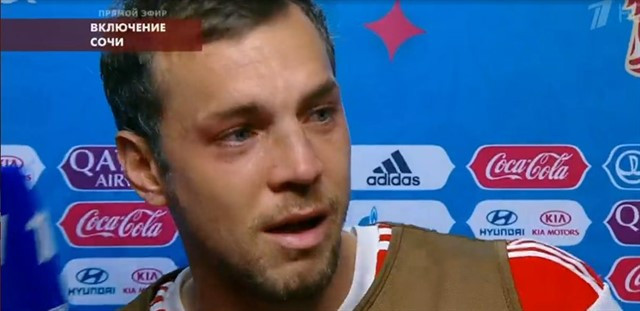
In the image, Dzyuba's face fills almost the entire frame. His eyes are moist, his mouth slightly open mid-speech, and his gaze is directed toward the interviewer outside the edge of the photo. A red national team shirt is visible, with a training bib worn over it. Behind him is a blue backdrop with rows of logos. At the top remain a live broadcast tag with the word "Sochi" and the Channel One logo.
The television styling preserves the circumstances of the recording: what we see is not a portrait staged to depict sadness, but a fragment of a post-match conversation. The juxtaposition of a very personal feeling with an official backdrop heightens the expressiveness. The hero is still in a public role as an athlete, must answer questions and sum up, yet the usual order of the interview gives way to emotion for a moment. This creates a recognizable situation in which a prepared speech stops obeying the speaker.
A farewell that is hard to say
In jokes, this reaction can signify more than defeat. It fits the moment when something good has ended and gratitude to people mixes with reluctance to part. A holiday, a trip, or a shared project takes on the same emotional structure: participants have been through a lot together, now a few ordinary words of farewell must be said, and these words suddenly seem too small for the accumulated feelings.
A comic variant appears when the occasion is greatly reduced. Instead of a big tournament, the caption refers to the last bite of a favorite food or the end of a short weekend. The face supplies gravity, and the words set a domestic scale. You can laugh at your own sentimentality without turning the footballer into an object of mockery. The combination of sadness and respect for a completed experience is especially expressive: the hero does not declare everything meaningless, and that is precisely why letting go is so hard.
Three new endings
Invented example: "When the last guest left after a good birthday party." The press backdrop becomes an imaginary place for the host's closing interview, and the gaze conveys the sudden silence after a noisy gathering. The comic solemnity arises because an ordinary evening takes on the scale of an event that must be discussed across the whole country.
Second variant: "Thanks to the vacation: it was short, but it tried very hard." The gratitude is addressed not to a person but to a period of rest that had to be seen off. A third scenario: "When I finished the dumplings grandma packed for me to take home." Here parting from food resembles parting from home care. In all cases the tears serve as an exaggerated form of gratitude, not as a claim that the hero of the original interview experienced these invented everyday events.