Seven hits and one miss
On June 28, 2018, Sergey Smirnov, then editor-in-chief of Mediazona, wrote on Twitter his version of the quarterfinal lineup. The prediction appeared before the round of 16 matches had finished, so it could be compared with the results as they came in. When Belgium beat Japan on July 2, the list drew readers' attention: the latest outcome matched the journalist's guess. An ordinary sports post acquired a new role as evidence of extraordinary foresight.
But the prediction did not become perfect. On the evening of July 3, England beat Colombia, while the list had expected Colombia. The final result was seven teams out of eight. The error did not ruin the joke, because the meme was already developing by its own rules. Smirnov was compared to animals said to predict football results, and imagined as a person capable not only of guessing an outcome but of arranging it in advance. The name of the list gradually came to mean any suspiciously lucky prediction.
A prophet against a catastrophe
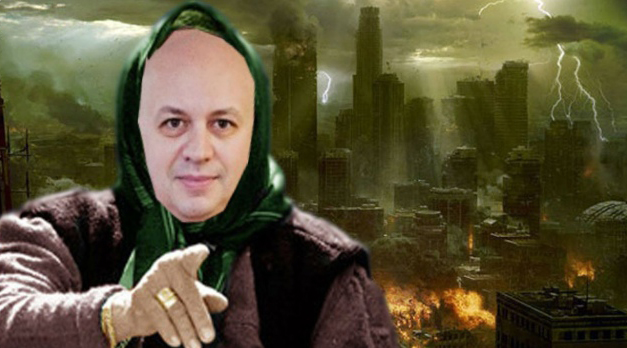
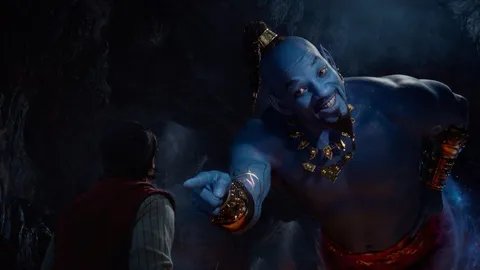
The list itself is not shown in this picture. Smirnov's face is inserted into the figure of a person in a green headscarf and dark clothing. A hand in the foreground points toward the viewer. Behind are high-rise buildings, smoke, fire and lightning under a gloomy sky. This is clearly a composite photomontage that turns a familiar portrait into the image of someone who seemingly knew about the coming destruction in advance.
The scale of the background is deliberately greater than the scale of the original event. The journalist drew up a football table, while the image gives him the setting of a prophet of the end of the world. The direct address of the face and the hand makes the picture resemble a personal warning. Even without captions it sets the tone: the viewer is, as it were, invited to recall who announced the future before everyone else.
The prediction turns into a cause
The main comic leap happens between “he predicted it” and “it happened because he wrote it that way.” Fans understand that the list does not control the games, but for a while they accept such a fantasy. That is why one can joke about players who supposedly were not warned, or about coaches trying to find their own name in the document. The specific surname ties the exaggeration to a recognizable episode rather than to a nameless sage.
After the tournament, the formula transfers easily to other areas. It requires an already recorded prediction and an event that unexpectedly matched it. An ordinary success in hindsight takes on the look of a secret plan. That is precisely why the surviving error is useful for understanding the history: the internet celebrated a lucky run of hits, and then added to it a mythology of omnipotence.
Invented lists of everyday life
An invented example: a friend listed in advance three topics that relatives would bring up at dinner, and all three came up. The caption “Dinner went according to the Smirnov list” turns a family conversation into an event of world significance. Another storyline: a colleague named the day an old printer would break. Now his note is shown as a document that the office equipment obeyed.
A third variant: a person guessed which dishes would run out first in the canteen. The apocalyptic background turns the vanished cutlets into a fulfilled prophecy. In all these invented situations, the humor lies in the mismatch of scale: a small observation acquires the reputation of infallible knowledge. What is at stake is a lucky guess that friends jointly play out as a supernatural ability.