Two Green Lanterns and one oath
The history of the phrase begins with Alan Scott, the first DC Green Lantern. He appeared in All-American Comics No. 16 in 1940; his powers are tied to magical green flame and a magic ring. A few years later, in Green Lantern No. 9 (1943), the oath took its familiar rhythmic form. At that time it was still Alan Scott who spoke it, not a member of an intergalactic corps; the Lantern would become a cosmic policeman only in another era of comics.
In 1959 writer John Broome and artist Gil Kane reintroduced the hero in Showcase No. 22. The new Green Lantern was pilot Hal Jordan: he received a ring from a dying alien, Abin Sur, and learned of the Corps that keeps order in different parts of space. Alan’s reworked oath passed to Hal and later became shared by the Corps. So the familiar words connect Scott’s magical story with Jordan’s science-fiction world.
How the phrase reached Hal Jordan
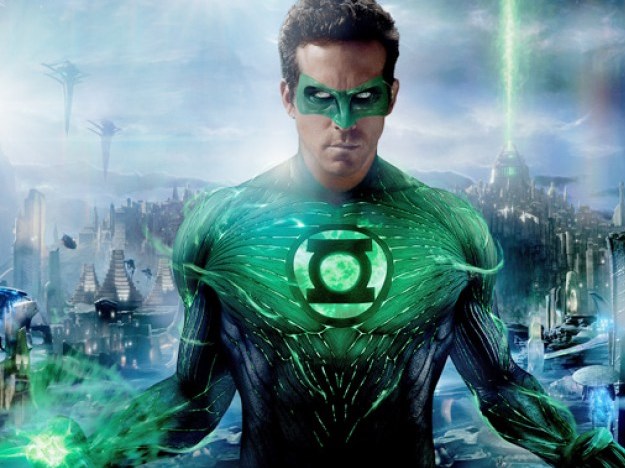
The 2011 film “Green Lantern” shows Hal Jordan as played by Ryan Reynolds; that cinematic costume is what appears in the image. The mask, the chest emblem and the glowing green patterns help identify the defender from the later, cosmic version of the story. The film itself came out decades after the comic oath, so the frame is not evidence of its origin but one of the ways a new audience has seen it.
The Russian rendering of the oath, “Во тьме ночной, при свете дня”, conveys the paired rhythm of the English “In brightest day, in blackest night”. In both versions darkness and light frame the vow, and then one can list what the hero is ready to protect. It is this clear rhythmic structure that lets the phrase sound complete even in a short caption.
Why the oath works in an everyday joke
The real oath promises to stand against evil in any light. The meme keeps its solemn rhythm but changes the scale of the task: instead of protecting the planet, the hero takes on a familiar trifle. He may follow the release schedule of a favorite podcast, fix a squeaky wardrobe, or put off doing laundry, and still sound as if he is preparing for a cosmic mission. The comedy is built on the mismatch between lofty pathos and an earthly matter.
Such a caption does not necessarily signal serious obsession. Often it is self-irony: the person knows they spend more attention on a habit than it deserves. The picture of a superhero adds scale and a recognizable tone to the habit, and the familiar words from the oath signal to the viewer where the solemnity comes from.
Invented captions
“In the dark of night, in the light of day, I will check whether the new episode is out.” An ordinary wait turns into a Lantern’s obligation. Or: “In the dark of night, in the light of day, the laundry basket has won again.” Here the pathos collapses into a domestic defeat, so the picture reads as a joke about one’s own resolve.
One more example: “In the dark of night, in the light of day, Dad is fixing the same wardrobe again.” A household chore becomes a local-scale feat. All these captions are invented for illustration. In comic history the oath was a hero’s promise to protect people; in the online joke its solemnity can be borrowed for any familiar task without attributing supernatural importance to it.