what's shown in the photo
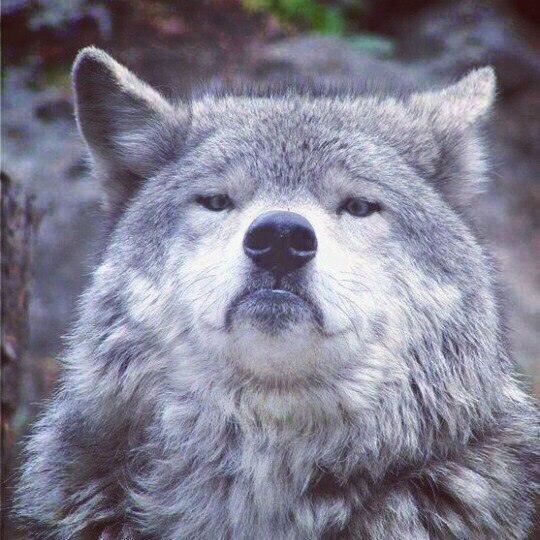
The photo is a close-up of a gray wolf with thick fur, a pale muzzle, and a dark nose. The head is raised and the eyes are half-closed, giving it a calm, self-satisfied expression. The background is blurred and dim: tree trunks and dark rocks can be made out behind it, creating a sense of wilderness without extraneous detail.
The main feature of the shot is the facial expression. The wolf looks as if it knows its own worth and expects to be acknowledged, and that look can be projected onto any situation where a person wants to highlight their own achievements. The viewer reads the photo almost like a human's facial expression, which is why the caption works more powerfully than the image itself.
The photograph looks natural, with no editing or distortion. That's exactly what gives the meme its credibility: the animal isn't deliberately posing, while the caption invests its gaze with a meaning that may not actually have been there.
origin
The origin of this particular photograph isn't established. The meme's template, an animal with a serious face plus a caption, is familiar to Russian-speaking users from many similar pictures. The authorship of this specific shot, the date of its first publication, and its original context are not confirmed.
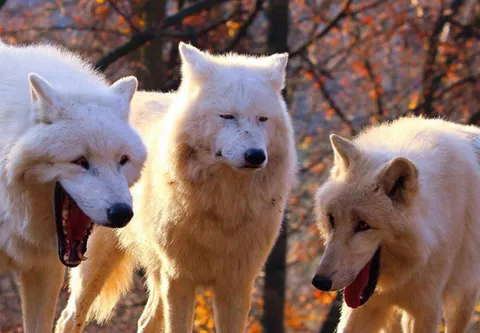
This image should be distinguished from another wolf meme that gained wide fame in the late 2010s. That one was built on a photo of a pack in the snow, where the wolf walking at the front was paired with self-glorifying lines. According to National Geographic, the shot was taken by photographer Ronan Donovan in Denali in 2016, and the pack's leader turned out to be a female wolf blazing the trail for the rest.
This distinction matters because both images involve wolves and captions and are easily confused in memory. Proud Wolf rests on seriousness and self-satisfaction, while the other, sometimes called the "shaggy wolf," rests on comic self-praise and the surprising fact that the pack's leader turned out to be female.
how the meme is used
A typical caption for Proud Wolf is a quote from a film, cartoon, or fable about pride, strength, or solitude. The phrase is chosen so the contrast with the wolf's face lands: the serious look and the solemn words sound absurd together, and that's where the joke lies.
The meme transfers easily to work and everyday situations. The wolf gets captioned under reports, successful purchases, solved problems, or simply a good day, whenever someone wants to show they're pleased with themselves. Such captions function as ironic self-presentation rather than sincere bragging.
The format is easy to replicate: just add a short phrase across the top of the shot, and the meaning registers immediately. That's why such captions are often made up by users themselves and frequently circulate through comments as a standalone joke.
why the meme works
The meme's main mechanism is the mismatch between the serious look and the caption. The wolf looks dignified and confident, and the text underneath adds a solemn pathos to that, which, combined with an ordinary photograph, turns into self-irony. The viewer isn't laughing at the animal but at the attempt to attribute human vanity to it.
A second reason is the image's versatility. The wolf's face is easily read as a sign of confidence or condescension, so it can be paired with almost any phrase. Thanks to that, the meme isn't tied to a specific topic and works across different communities, from school group chats to work correspondence.
Finally, the meme is effective because of its brevity. Getting the joke doesn't require knowing the photo's history or the origin of a specific phrase: seeing the wolf and reading the caption is enough. That's why the meme keeps its recognizability even when pulled out of its original context.