What's shown
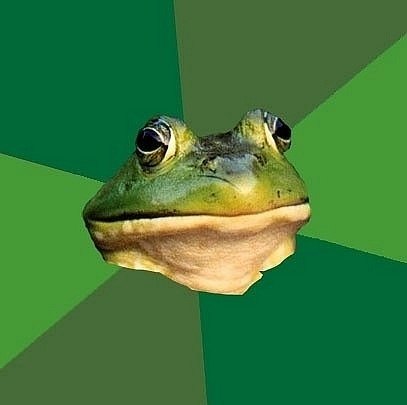
The photograph shows a large green frog staring straight into the camera. Its eyes are bulging, dark, and slightly narrowed, and its wide mouth is closed in a half-smile that gives the face an expression of calm self-satisfaction. The frog's skin looks damp, and its pale belly and chin contrast with its dark green back.
The background consists of diverging green sectors in different shades, creating a color-wheel effect. Such a background was typical of early macros, where a photo was placed on a simple flat backdrop so the text would read more easily. The frog itself is indifferent to what's happening, which means the caption fully determines the meaning of the picture.
History and origin
The photograph appeared in June 2008 in an article on the site remedicated.com titled "10 Bizarre and Ineffective Home Treatments." The site is no longer active. The image's filename referenced a sore throat and the worst home remedies for it, which explains the original context of the picture.
The macro format with captions, a green background, and text took shape about a year later, in June 2009, and quickly took its place in the advice-animal series. An entry for the meme appeared in November 2009 in an English-language database of internet memes, and Meme Generator is named as one of the first platforms where it spread. The author of the first version with captions has not been established.
The meme became one of the most popular generators in its series: on Meme Generator it ranked second by number of copies among all advice animals. A related format, Foul Bachelorette Frog, emerged for it, in which the frog describes women's slovenliness. This shows how easily the template adapts to different gender roles.
How the meme is used
Typical captions describe everyday transgressions. For example, "RAN OUT OF SHAMPOO — USE SOAP" or "SPILLED A DRINK ON THE FLOOR — TIME WILL CLEAN IT ALL UP." The captions read like self-description, so the meme is often used not to criticize but to confess. The captions are usually written in large letters and delivered with a straight face, which heightens the comic contrast.
Most often the meme is applied to a bachelor who lives alone and doesn't keep things tidy. But users also apply it to themselves and to acquaintances. In messaging, the frog usually serves as a quick reaction to a confession like "I haven't done the dishes since Monday," and the other person replies with an equally candid message.
Sometimes the frog delivers comic advice, when the caption offers an absurd recommendation presented in earnest. This device softens the subject and makes the confession safe to share, since everyone in the conversation is laughing at themselves.
Why the meme works
The main mechanism is recognition. Viewers see their own habits in the caption and realize they're not alone. The format's anonymity lets people admit to unflattering behavior that would feel awkward in ordinary conversation. A frog that looks on without judgment becomes a safe interlocutor.
The image of a slovenly, single man is tied to a certain stereotype about domestic habits, but the meme doesn't turn it into an insult: the captions describe actions, not nationality, appearance, or any social group. That's why the joke stays good-natured self-deprecation, which both internet users and their friends happily share.
Finally, the photograph itself is expressive. The frog's bulging eyes and half-smile create a comic sense that the animal understands everything but isn't about to change anything. This contrast between a calm look and unflattering captions has long worked in other macros too, and the frog remains one of the best examples of that emotional delivery.