Appearance
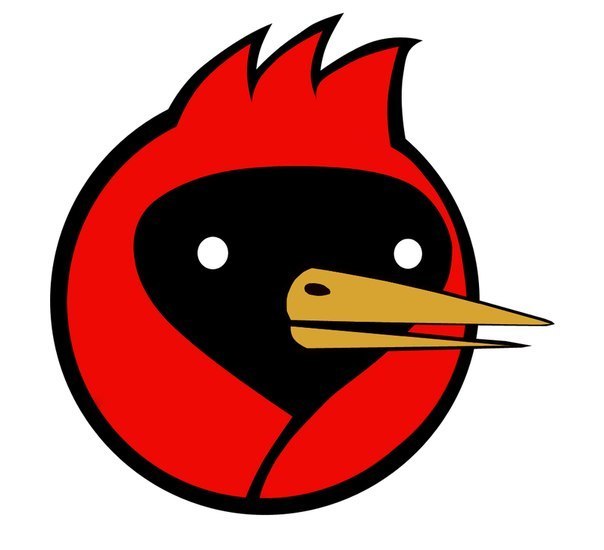
The bird is drawn in a flat vector style. The head is round and surrounded by red plumage with three sharp tongue-like feathers on top, while the face is taken up by a black mask with two white eyes. A long yellow beak juts forward and ends in a thin point, and a black outline around the silhouette makes the image look like a badge or logo.
The simple graphics make it easy to reproduce. It has been used as an avatar, a sticker, and a caption for posts, so the same picture has appeared in different contexts without explanation. Because of this, the meaning of the meme often rests not on the image but on the text that accompanies it.
Names
The name "Omsk bird" and its derivatives, "the bird from Omsk" and "the Omsk crow," point to a connection with the city of Omsk, though the reason this association took hold is not confirmed by open sources. No single variant has become universally accepted; participants in discussions use whichever name sounds more natural to them. The variant "Wingedum" appears less often and is known to a smaller circle.
Wordplay and the second meaning
The basis of the meme is an expression that is understood literally. When the conversation turns to the bird because of its appearance or name, the text takes on an unexpected everyday or slang meaning, and the joke builds on the sharp shift from a neutral picture to a slang context.
Users typically play on exactly this gap between the literal and figurative meaning. The more absurd the shift, the stronger the effect: viewers first see a harmless character, then realize the caption has another layer to it.
Slang and subculture
Memes tied to drug-related jokes existed in the Russian-speaking internet mainly within closed and semi-closed communities. Their humor relies on slang understood by the participants, and so to outsiders it looks like a set of incomprehensible references.
It is worth clarifying: the meme itself contains no instructions and rests on wordplay rather than on any calls to action. Jokes of this kind more often mock the slang itself and its recognizability than real behavior, so in discussions they are usually treated as an absurdist game.
Spread
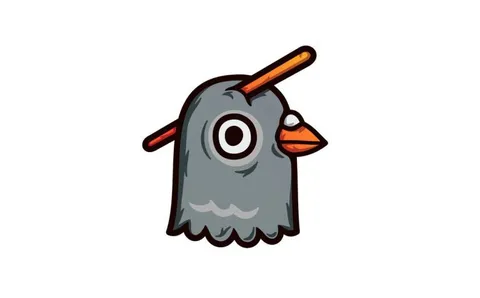
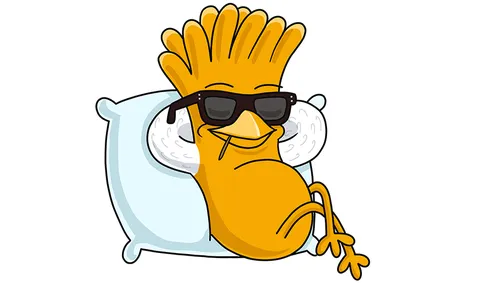
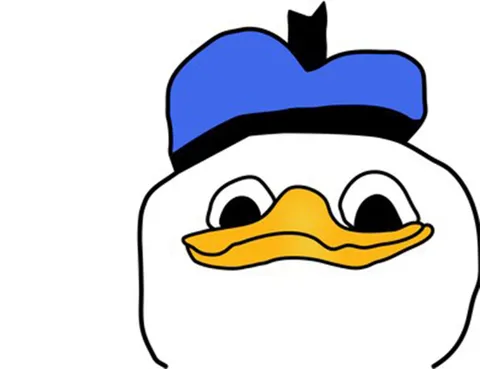
The image circulated in comments, on stickers, and in themed groups. Because of its ambiguous content it is often confused with other bird pictures, so copies of it are frequently accompanied by a clarification of exactly which one is meant.
Over time a small set of standard captions formed around the picture, which users recognized at a glance. Each of them relied on the same wordplay, so it was easier for a newcomer to understand the joke if they had already seen similar examples in the comments. This made the meme convenient for closed groups, where participants already knew the context.
What is known and what is not
The timeline of the image's appearance, the name of the artist who drew it, and the first source of publication are not known. The description therefore relies on the picture itself and on common interpretations of its name rather than on documented data about its creator.