What's shown in the picture
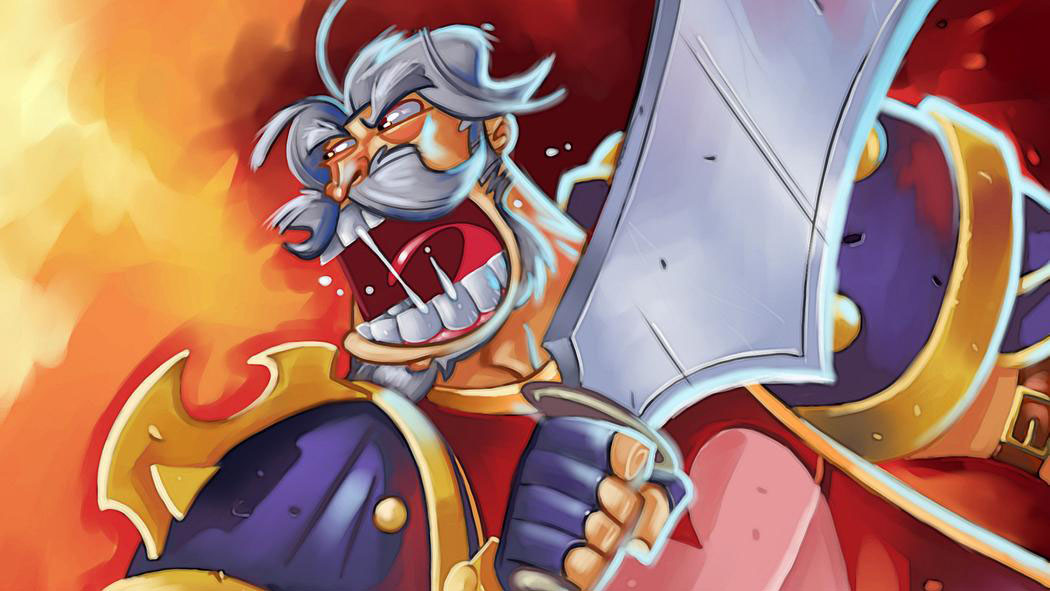
The picture is a stylized illustration, not a frame from the original video. It depicts a bearded warrior with gray hair, mouth wide open, and a ferocious expression. He's clad in blue-and-purple armor with gold trim and holds a huge pale-blue two-handed sword. The background is bathed in warm orange-red light, creating a sense of heat, urgency, and an approaching clash.
The low angle and diagonal composition heighten the dynamism: the sword nearly escapes the edge of the frame, and the hero himself looks ready to charge forward. This image accurately conveys the meme's essence: the character isn't thinking or waiting, he's already in motion and loudly announcing his presence. That's why the illustration pairs so easily with the idea of a desperate, planless attack.
Origin and history
The video was recorded in 2005 inside World of Warcraft, an online game by Blizzard that was released in 2004 and quickly gathered a massive audience. The clip captures an episode of a group dungeon run, where a party of players is preparing for a fight. One of the participants, by common accounts, recorded his own gameplay, and that very clip later became the basis of the meme.
In the clip, a player suddenly shouts his own name and charges at the enemies without waiting for the rest of the group. The team tries to stop him, but the attack is already underway, and the outcome is predictable. The recording stands out for its easygoing humor and the participants' lively reactions, which made it especially noticeable against the backdrop of standard gameplay videos.
The video spread through early video-hosting sites and forums and became one of the first mass gaming memes. It outlived the era of its own appearance, and people still recall it as an example of how an in-game situation can turn into a cultural phenomenon. The character's name stuck in gamer lingo as a synonym for an impulsive act.
How the meme is used
The phrase "Leeroy Jenkins" is most often used when someone acts without a plan and drags everyone else along. For example, in response to an impulsive suggestion in a chat, the caption "well, here comes a Leeroy" might appear. The phrase warns that an epic start will almost certainly end badly, while still carrying a note of self-deprecating humor.
In games, this label is often applied to players who dive into battle ahead of time. A team might jokingly call such a participant "Leeroy," as a reminder that strategy matters more than impulse. In picture captions, the meme often accompanies images of warriors charging into attack, or scenes where the hero clearly overestimates his own strength.
Outside of games, the expression is used in conversations about work and school. If a coworker makes a decision without checking with the team, the discussion might include "there goes another Leeroy." In this way, the meme becomes a universal label for any headstrong action that ignores the overall plan.
Why the meme works
The joke's main mechanism relies on the anticipation of disaster. The viewer watches the character loudly announce the start of an attack and understands a failure is coming next. It's precisely the predictability of the outcome that makes the scene funny: everyone watching knows how it's all going to end, yet the hero keeps acting with a confidence that draws a smile.
The second reason is the familiarity of the situation. Almost every player has experienced a teammate charging into battle unprepared, and that experience makes the video feel close to home. The laughter comes from a shared memory of failed raids, where someone else's impulsiveness led to the whole group's defeat. That's why the clip reads as a parody of a recognizable reality.
Finally, the meme is simple to use. One name is enough to convey a whole story: impulsiveness, epicness, and an inevitable failure. Thanks to this brevity, the expression outlived its gaming origins and became part of everyday slang. The illustration of the powerful warrior only reinforces the effect, turning an ordinary mistake into a vivid, epic moment.