Where the phrase came from
The expression "blya, chto by podelat'" belongs to colloquial speech and describes a hopeless situation where there's nothing left to do but accept it. It's often said with annoyance or with a smirk. The phrase itself is unremarkable in the Russian-language internet, but in the blogger's delivery it took on a distinctive intonation and became recognizable.
The slurred version "lya sho by podelat" arose because the words run together in speech: the "bl" sound turns into "lya," and the ending gets clipped. Such slips of speech often become the basis for memes because they sound both absurd and instantly familiar. It's worth noting that the joke rests on the mispronunciation and intonation, not on the person's appearance.
How the meme spread
The phrase quickly spread across social networks and video platforms, where it was posted as short clips and images. Users recorded their own versions of the pronunciation and dropped the phrase into comments and chats. In this way the meme moved beyond the blogger's own audience and became familiar to people who hadn't known him before.
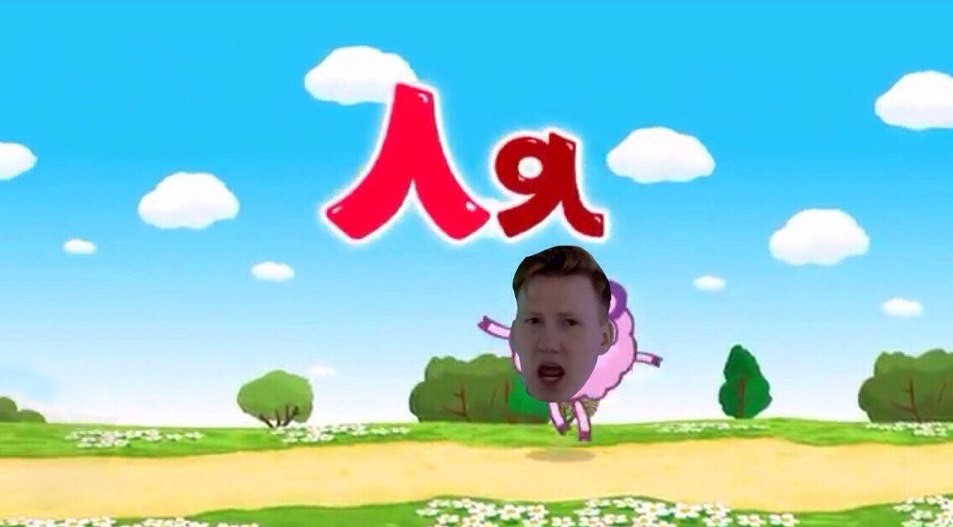
In the image that accompanies the meme, the blogger's face is placed on a pink sheep against a cartoon landscape. This technique, common in internet humor, creates a comic contrast and shifts attention from the verbal slip to the absurd image. We do not give further details about the original video the shot was taken from, since we were unable to verify them reliably.
Use and variations
In chats the meme is usually used as an ironic response to a hopeless situation: when a task is difficult, an assignment is unpleasant, or a result is obviously bad. The phrase is short, easy to type, and instantly understood by native speakers, which makes it well suited for comments and image captions.
Variations mostly appear at the level of captions and voiceovers: users repeat the garbled pronunciation, change the endings, or insert the phrase into other clips. The meme's value lies in working as a shared joke within the community. In most cases it's taken with a smile rather than as an attempt to mock a specific person.
Context and assessment
The Russian-language internet is rich in memes built on speech slips and "incorrect" pronunciation. Such jokes rely on familiar intonations and quickly become part of the language. The meme "Lya sho by podelat" fits into this tradition and shows how a single slip of the tongue can turn into a recognizable sign.
Since the joke involves a real person's face, it's worth treating it carefully: the meme is appropriate as long as it relies on the speech and the image, not on humiliating the person. Biographical details about the blogger himself are not given in this text, since they could not be reliably confirmed from open sources.