What the image shows
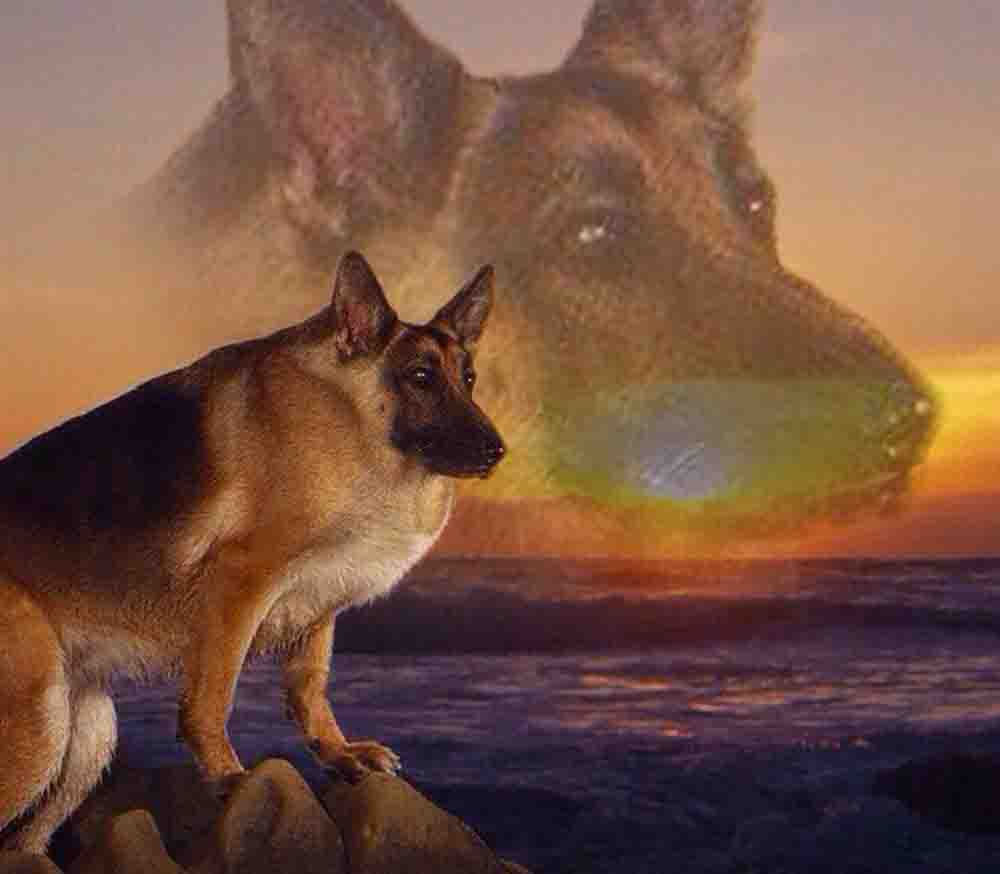
The picture shows a German shepherd sitting on a rocky shore and turning its head toward the viewer. Behind it, against an orange-and-purple sunset, a giant, semi-transparent dog's head with ears, eyes, and a muzzle shows through. The colors of this head shimmer, a rainbow-colored patch appears around the muzzle area, and because of this it looks less like a living creature than a reflection or a ghost.
Visually the effect looks as if the head has no connection at all to the body of the dog sitting below. Descriptions of the meme usually point out that the dog appears to have no neck. It's exactly this disconnect between the real animal and the phantom head that makes the shot recognizable and turns an ordinary photo into an absurd image.
Origin of the edit and the phrase
The exact origin of the edit has not been established. Judging by the style, it's a digitally processed photograph in which a real picture of the dog is combined with a semi-transparent layer showing a huge head. Techniques like this were common in the early 2010s, when users experimented with overlaying images in graphics editors and posted the results on forums and in communities.
The phrase "Max, go fuck yourself" has a crude, colloquial form and reads as a refusal or a way of telling someone off. The name "Max" here appears to be arbitrary and doesn't refer to a specific person. Exactly which story or joke first connected this phrase to this particular photo is not known.
How the meme is used
The picture is usually paired with a caption that functions as a refusal: when the other person is pushing an unpleasant topic, suggesting a pointless option, or being too insistent. The photo works as a visual exaggeration: the dignified dog looks at the viewer, while a huge ghost looms above it, and the crude phrase sounds even funnier as a result.
In chats and comments the meme is often used as an ironic reaction to someone else's stupidity or pushiness. Sometimes it's applied in jokes about an "invisible Max" who is constantly present in the conversation but never actually takes part in it, which is another variation on the picture's absurd logic.
Why the image works
The comic effect relies on contrast. A majestic shot of a dog against a sunset is paired with a crude, blunt phrase. The calmer the image looks, the funnier the caption sounds, which is why the meme stays recognizable even without any explanation.
The form of the edit itself matters too. The semi-transparent head looks unusual enough to grab attention in a feed, but not realistic enough to be unsettling. That makes the picture a safe object for a joke, convenient to use in all sorts of situations.
Place in internet culture
Captioning photos of animals is a common genre of Russian-language memes. The animal becomes the mouthpiece for a human line, and the viewer fills in the meaning themselves. In this genre, what matters isn't the origin of a particular photo but the simplicity of the format and the ability to use it in one's own context.
Since the original source hasn't been established, any claims about a specific author or the date of first publication remain speculative. What can be said reliably is only that the combination of the shepherd, the ghostly head, and the crude phrase has become a stable image online and keeps getting reused in comments and chats.