What the picture shows
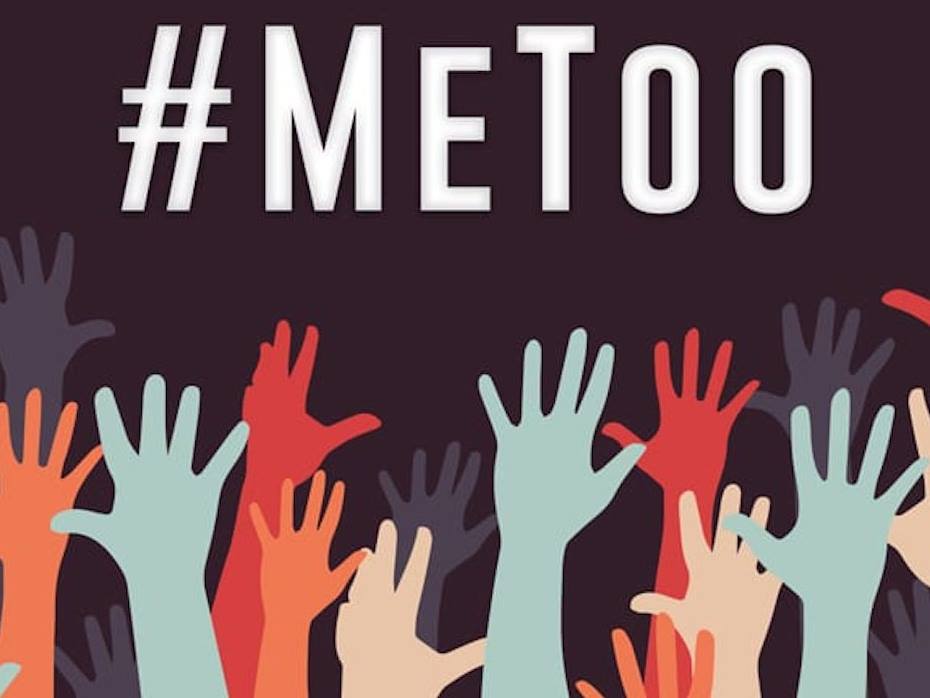
This is a flat illustration, not a photograph. The background is dark burgundy, and the words #MeToo are written across the top in large white letters. Along the bottom, hands of different colors reach upward: turquoise, orange, red, gray and skin-toned, some of them semi-transparent and running off the edge of the frame.
This image speaks of collective support and participation, not of a particular person or episode. Identically shaped hands in different colors read as the signal “I am here too” and “we are many”, so the picture is best placed alongside serious material.
Where the phrase came from
The phrase “Me too” is associated with the American activist Tarana Burke. By her account, in 2006 she began using it in her work with girls and young women who had survived violence, to show them they were not alone. Burke herself also recalls an earlier episode from the late 1990s, when a girl shared her story with her, and she could not find the strength to answer “me too”.
It is important to distinguish two threads: the phrase itself as a tool of support, which had lived in the activist’s work long before, and the hashtag, which appeared later and became mass.
October 2017
In autumn 2017, after reports about the producer Harvey Weinstein, the conversation about harassment in the film industry became widespread. On 15 October 2017, the actress Alyssa Milano wrote on Twitter that people who had experienced sexual harassment or assault should respond with the words “Me too”, to show the scale of the problem.
Soon it became known that Burke had used the phrase many years earlier, and Milano publicly credited her work. Thus an expression from one activist’s practice became a common hashtag under which thousands of people wrote.
How the hashtag became a movement
In the first days, the hashtag was used hundreds of thousands of times, and Facebook reported that millions of users worldwide took part in the discussion within a single day. These figures come from platform reports from 2017 and show the scale, not an exact count of posts.
The hashtag quickly acquired versions in other languages, such as French, and went beyond the entertainment industry: people from all kinds of professions told their own experiences. In December 2017, Time magazine named “The Silence Breakers” its Person of the Year. Further legal and social consequences differed from country to country and cannot be reduced to a single story.
Examples of captions and how they work
For this subject the captions must be serious: irony is out of place here. Instead of a joke, a short phrase that explains the meaning of the picture works. Three examples, written for this illustration, follow.
“Each hand is someone’s voice that stayed silent for too long. #MeToo.” The caption names the image and turns the visual metaphor into a direct statement.
“Sometimes one phrase says more than a long text.” The hashtag works here as a full stop that closes a thought without further explanation.
“Not the start of the conversation, but a reason to continue it.” The caption shifts attention from the one who spoke first to those who respond, which matches how the hashtag was actually used.
How to use this image
The illustration suits material about supporting survivors, about rights and laws, and as a reminder that real people stand behind the hashtag. The topic is painful, so captions should speak about the phenomenon as a whole and not name those who did not speak publicly.
If a personal story needs to be shown, it is safer to use the person’s own text with their consent, rather than adding details of your own. The picture should not be used as a template for jokes: it is not intended to mock, and in that role it only harms the conversation.