From letters to a price tag
In English-language versions, the Electronic Arts logo replaces the neighboring letters E and A inside an ordinary word. In this way, the recognizable mark of the game publisher is built into the name of a tea, an eagle or another item. A price is placed alongside, and sometimes the item itself is split into a “base game,” an expansion and a special edition bonus. This is a visual parody of the feeling that the buyer is being sold an incomplete thing.
The series can be traced on Reddit to July 2018. Among the early posts is one by Isacos66 from July 23 in r/dankmemes. Already the next day, other wordplays and multi-tier price tags appeared. The eagle example is tied to a post by DranoelThGreat from July 24. These records allow the early wave of the format to be dated; they do not establish the origin of the years-long criticism of Electronic Arts’ monetization as a whole.
An eagle without the right to fly
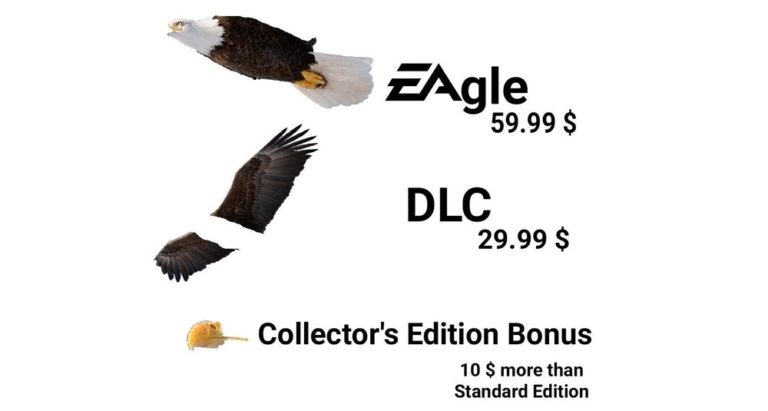
On a white background a bird is shown, with its wings and beak drawn separately. In the word “eagle” the first letters are replaced with the EA sign; next to the base version stands $59.99. The wings are labeled DLC and priced at $29.99. The beak is marked as a special edition bonus that costs ten dollars more than the standard version.
The joke turns anatomy into a showcase of a digital store. Before looking at the prices, the viewer understands that an eagle without wings does not perform its main function. So the additional purchase looks less like an expansion of abilities and more like the condition for getting the whole item. The beak amplifies the absurdity: even a substantial part of the bird’s appearance is declared a privilege of the more expensive package. The numbers here belong to an imaginary sale, not to any real product of the publisher.
How a gamers’ dispute became universal
Video games can sell expansions, cosmetic items and various editions. The meme deliberately erases the differences between these models and shows the case most irritating to buyers: a necessary function hidden behind a second payment. So the picture expresses the joke author’s judgment rather than serving as an accurate description of every Electronic Arts game.
The parody is understood even by someone who rarely plays games. It is enough to imagine a chair without legs or a kettle that cannot boil water. The logo replaces a long explanation: a familiar letter in the name turns an ordinary object into a symbol of disputed pricing. The arrangement of details creates a sequence of disappointments — first an attractive base price, then the discovery that full use will cost extra.
Invented goods for such a showcase
First invented example: “Tea — standard edition; tea bag — expansion; hot water — season pass.” An everyday habit is broken down into absurd purchases, and each next item takes away part of the promised drink. Second variant: “A diary with one page. The other months unlock separately.” Here the mismatch between the annual title and the actual volume of the product is funny.
Third plot: “Alarm clock free, turning off the ringing in the premium version.” It shifts the direction of the joke: you pay extra for stopping a service you have already received. For this format, one item and two clarifications are enough for the reader to see the structure of the imaginary store. An overgrown price list can weaken the original pun; details without which the base item clearly loses its meaning work best.